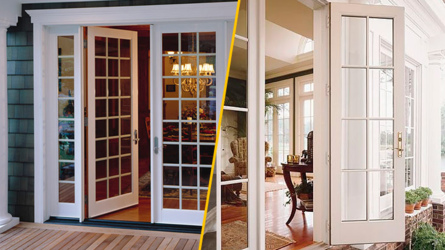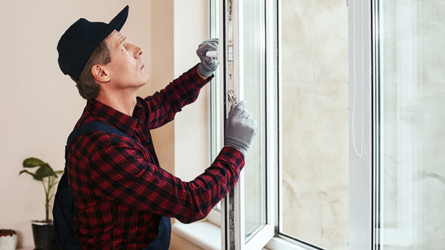
Casement and awning windows look like cousins from a distance, both swing outward, both use a crank, and both seal tightly. But the moment you start choosing between them for a real room, a bedroom that needs an emergency exit, a bathroom that gets rained on, a kitchen over a sink, they stop behaving the same way. This guide shows you, room by room, which one fits your Toronto or GTA home.
Key Takeaways
- Casement windows are side-hinged and swing outward like a door; awning windows are top-hinged and tilt out from the bottom.
- Both are among the most energy-efficient operable window styles in Canada, thanks to compression seals and multi-point locking.
- Casement windows are the standard choice for bedroom egress under the Ontario Building Code; awning windows rarely qualify.
- Awning windows can be left open during light rain, which is why they are common in bathrooms, basements, and kitchens above sinks.
- Installed pricing in Ontario for 2026 typically runs $600–$1,100 per casement and $650–$1,200 per awning.
- Most Toronto homes combine both styles by room function; it's rarely "one or the other".
What Are Casement and Awning Windows?
Both belong to the crank window family. Instead of sliding, they open outward on hinges and are operated by a folding crank handle. When closed, the sash compresses against continuous gaskets on the frame, using the same sealing principle as commercial cold storage doors. This is why crank windows consistently outperform sliding and double-hung styles in air leakage tests.
The difference is where the hinges sit.
| Feature | Casement Window | Awning Window |
|---|---|---|
| Hinge location | Left or right side | Top of the frame |
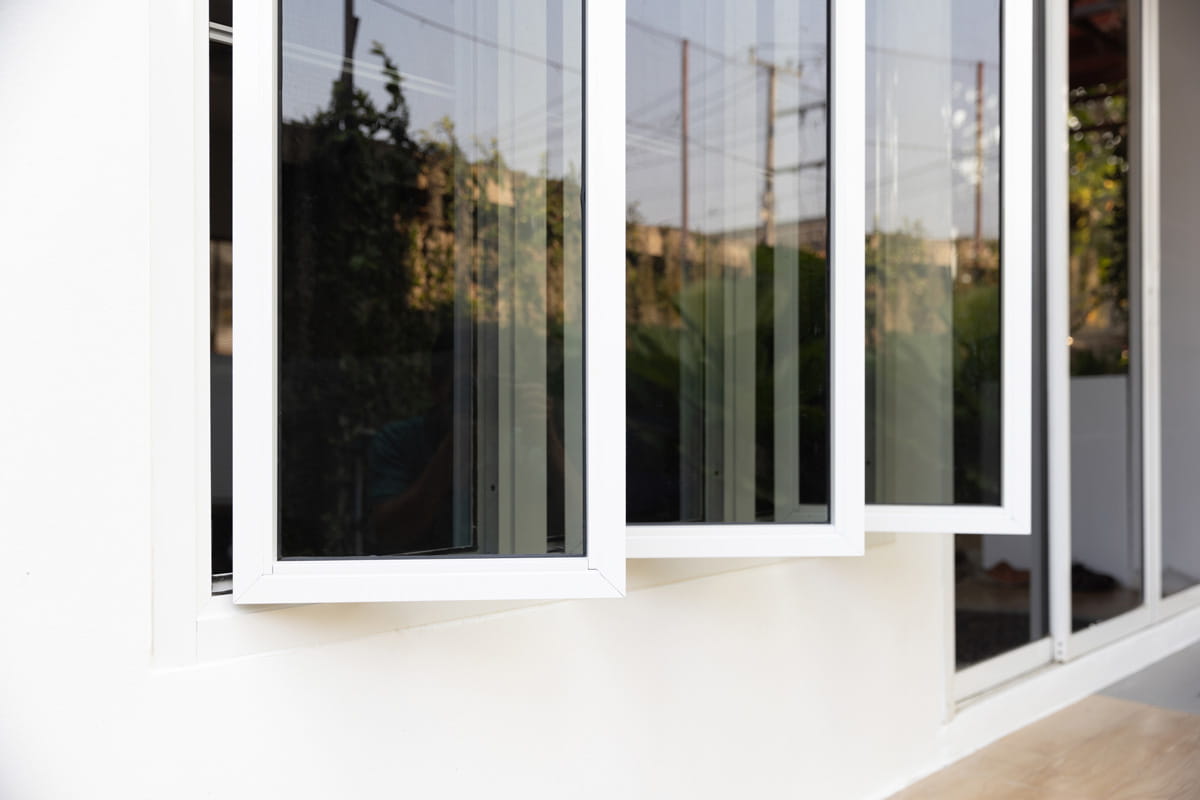
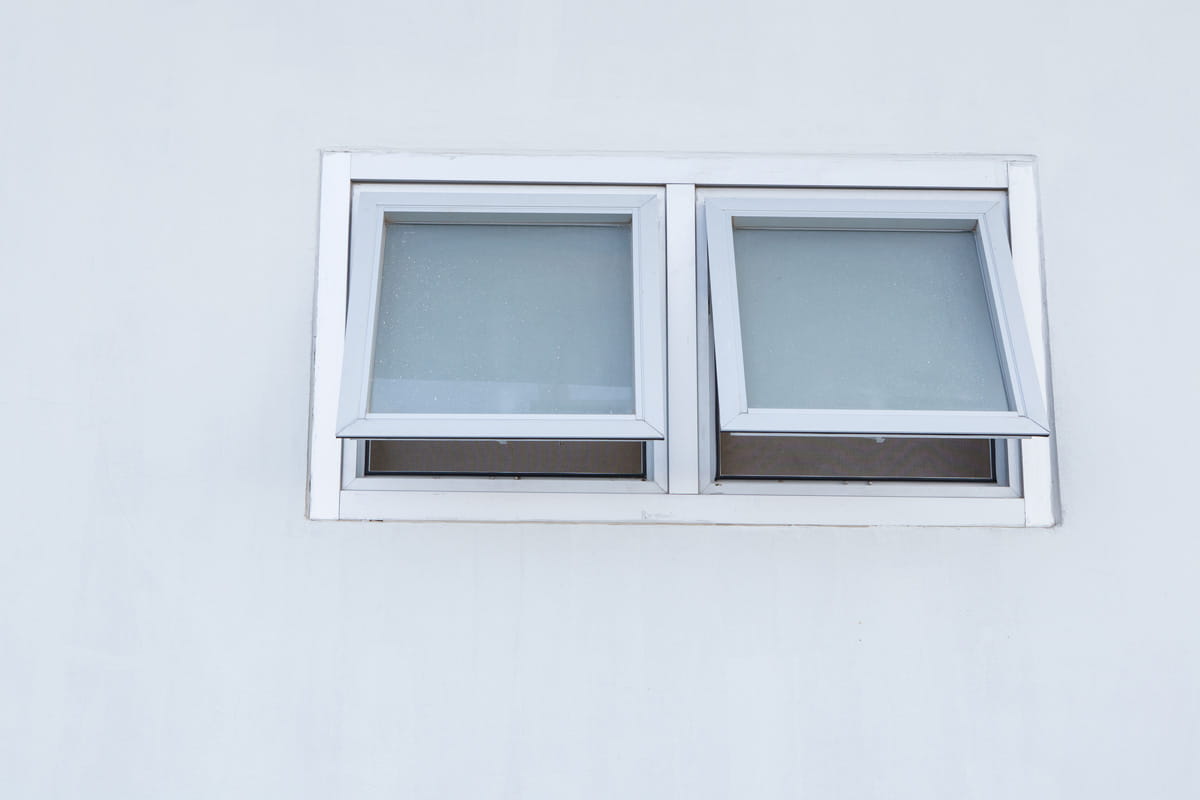
| Opening direction | Swings outward like a door | Tilts outward from the bottom |
| Typical opening angle | Up to 90° | 30°–45° |
| Sash proportion | Taller than wide | Wider than tall |
| Egress compatible | Yes (in most sizes) | Rarely |
| Best for rain | No | Yes (acts as a shield) |
| Common placement | Bedrooms, living rooms | Bathrooms, basements, above sinks |
Casement vs Awning Windows: The Real Differences
Opening Mechanism and Airflow
A casement swings open like a small door; the entire sash leaves the opening, so a side breeze gets funnelled directly into the room. An awning tilts from the bottom and stops at roughly 30–45°, so airflow is gentler. The trade-off is rain protection: the glass panel above the opening shields the interior, which a casement cannot do.
Best Areas for Installation
Opening proportion usually decides the choice. Tall, narrow openings — bedrooms, living rooms, stairwells are built for casements. Wider, shorter openings above kitchen counters, basement window wells, and behind bathroom vanities are built for awnings.
In most Toronto detached and semi-detached homes, bedrooms use a single large casement to meet the egress rule, while basements use awnings because the opening is wider than it is tall, and rain protection matters only partially below grade.
Energy Efficiency in the Canadian Climate
Both styles use compression seals and multi-point locking, keeping air infiltration very low. In real Toronto winters, this matters more than U-value alone. Most heat loss in older homes happens through gaps and leaks, not through the glass.
Actual energy performance depends on what's inside the frame:
| Spec | Standard | High-performance (2026) |
|---|---|---|
| Glazing | Double-pane | Triple-pane |
| Coating | Single Low-E | Double or triple Low-E |
| Gas fill | Argon | Argon or Krypton |
| Spacer | Aluminum | Warm-edge composite |
| U-factor (W/m²K) | ~1.6 | ~0.9–1.1 |
Triple-pane casements and awnings can reach U-factors low enough to qualify for the Ontario windows rebate programs running in 2026.
Emergency Egress and Ontario Building Code
If a bedroom window needs to serve as an emergency exit, the choice is effectively made for you. The Ontario Building Code requires every bedroom to have at least one window with a minimum unobstructed opening of 0.35 m² (3.77 sq ft), no dimension less than 380 mm (15 inches), and operable without keys or tools.
- Casement windows clear this bar because the sash swings fully out of the opening, leaving the entire frame as clear escape space.
- Awning windows rarely qualify — the partially open sash blocks the upper portion of the opening, reducing usable area below code minimum.
For below-grade bedrooms, this often pushes homeowners toward a basement egress window installation — a properly sized casement paired with a window well.
Ventilation and Rain Performance
This is where awnings earn their keep. Because the glass tilts out and over the opening, an awning stays open during light rain, drawing fresh air without letting water in. On a still summer evening, the reverse is true: a casement opened to 90° pulls far more air through the room. Homeowners who use natural ventilation to reduce AC load prefer casements in main living areas.
Security and Locking
Both styles use multi-point locking; a single crank handle engages two to four locking points around the sash. The hardware sits on the interior, so neither window can be opened from the outside without breaking the glass. Forced-entry resistance is essentially the same.
Cleaning and Maintenance
Both styles are designed so that exterior glass can usually be cleaned from inside; a casement opened to 90° gives full access. Awnings are slightly trickier because the open sash sits above the opening. Both crank operators benefit from light annual maintenance: lubricant on the gears, a wipe of the hinge tracks, and a check of the compression gasket. Done yearly, a quality crank window operates smoothly for 20+ years.
Casement and Awning Window Prices in Ontario (2026)
There is no major structural price difference between casement and awning windows of similar size and spec; they share crank operators, gaskets, and glazing options. Cost is driven by size, glazing, frame colour, and installation type.
| Window type | Typical installed price (Ontario, 2026) | Notes |
|---|---|---|
| Standard double-pane casement | $600 – $900 | Common bedroom/living room size |
| Triple-pane Low-E casement | $800 – $1,100 | ENERGY STAR Most Efficient rated |
| Standard double-pane awning | $650 – $950 | Bathroom/basement size |
| Triple-pane Low-E awning | $850 – $1,200 | Best for cold rooms and basements |
| Large casement (over 36" wide) | $1,100 – $1,600+ | Often, egress sizes for bedrooms |
| Custom exterior colour | +10–15% | Black, bronze, custom RAL |
Prices reflect supply and installation by a manufacturer-installer. Brick-to-brick and upper-floor installations add to the labour portion of the quote.
Pros and Cons Side-by-Side
Casement — Pros: largest unobstructed opening, Ontario egress compliant, best cross-breeze ventilation, unobstructed views, integrated multi-point locking, easy cleaning access from inside.
Casement — Cons: cannot stay open in rain, needs exterior swing clearance, not suited to wide-and-short openings.
Awning — Pros: can stay open in rain, pairs well with picture windows, blocks line of sight when open, seal performance equal to casements, great for hard-to-reach spots, can be wider than casement.
Awning — Cons: rarely meets bedroom egress, less ventilation than a fully open casement, must be cleaned from outside.
Which Window Type Is Right for Your Room?
Most Ontario homes use both styles. The right answer depends on what the room needs.
| Room | Recommended | Why |
|---|---|---|
| Bedroom (above or below grade) | Casement | Egress compliance + ventilation |
| Basement bedroom | Casement with a window well | Egress is mandatory below grade |
| Bathroom | Awning | Privacy + rain ventilation |
| Kitchen (above sink) | Awning or Casement | Awning if reach is limited; casement for max airflow |
| Living room/family room | Casement | Best views and cross-ventilation |
| Basement (non-bedroom) | Awning | Wider opening shape, rain protection |
| Stairwell / tall opening | Casement | Matches the proportion |
A common Toronto detached-home setup: casements in bedrooms and living areas, awnings in basements and bathrooms, picture windows in the largest viewing positions.
How the GTA Climate Affects Your Choice
- Snow loading. Awnings should be fully closed during heavy snowfall; accumulated snow on top of an open sash stresses the hinges. Casements are unaffected.
- Ice buildup. Triple-glazed units with warm-edge spacers minimize exterior frame icing by keeping the interior surface warmer.
- Wind exposure. A casement opened in high wind can slam against the limit stop. Exposed lakefront and rural homes benefit from limited-open hardware.
- Humidity. Bathrooms and kitchens in older Toronto homes often address condensation with an awning used as a trickle vent, cracked open to let humidity out without exposing the room to the weather.
Professional Window Replacement in Toronto and the GTA
At Vinyl Light Windows & Doors, we manufacture and install casement and awning windows across Toronto and the GTA. Our standard build uses multi-chamber vinyl frames, double or triple-pane insulated glass with Low-E coatings and Argon fill, warm-edge spacers, and multi-point locking, the spec set most relevant to Ontario's climate.
Most projects combine both styles by room function. Custom sizes, brick-to-brick installations, and ENERGY STAR Most Efficient configurations are available.
Contact us for a free in-home estimate — we will measure your openings, recommend the right combination for each room, and provide a transparent, no-obligation quote.
The choice between casement and awning windows is rarely about which style is better; it is about which fits the room. Casements win on ventilation and egress. Awnings win on rain performance and hard-to-reach openings. The best window project uses each style where it belongs, with the spec set tuned for Ontario's climate.