
The colour of a front door gets most of the attention, but the hardware finish- the handles, hinges, and lock- is what people actually touch and what ties the whole entryway together. Choosing a finish that matches the home's architecture and holds up to GTA weather matters as much as choosing the door itself.
It is a detail that is easy to treat as an afterthought, chosen quickly at the end of a door order. Getting it right pulls together everything else at the entry, from house numbers to light fixtures, and getting it wrong is surprisingly noticeable.
Hardware also tends to be one of the longer-lasting choices at the entry, often outliving a paint colour or a set of exterior light fixtures, so it's worth choosing deliberately rather than defaulting to whatever finish happens to be on display.
Key Takeaways
- Hardware finish matters as much as door colour for how the entryway is actually experienced.
- A handful of finishes cover most popular choices for GTA homes, each pairing with a different look.
- Matching hardware to a home's architectural style is a straightforward way to get a cohesive result.
- Different finishes hold up differently to Ontario weather over time.
- A few common hardware mistakes are easy to avoid once you know what to look for.
Why Hardware Finish Matters as Much as Door Colour
Hardware is the most-touched, most-visible detail on an entry door. A visitor interacts directly with the handle and sees the hinges and lock up close in a way that colour alone cannot compete with from a distance.
The right finish ties together the door itself with the house numbers, light fixtures, and mailbox nearby. When those pieces are chosen independently, the entry can end up looking disjointed even if each individual piece is attractive.
This is especially true at night, when exterior lighting throws a different quality of light on metal finishes than daylight does. A finish that looks right in a showroom under bright light can read differently once it is mounted outside and lit by a porch fixture.
Popular Finishes for GTA Homes and What They Pair With
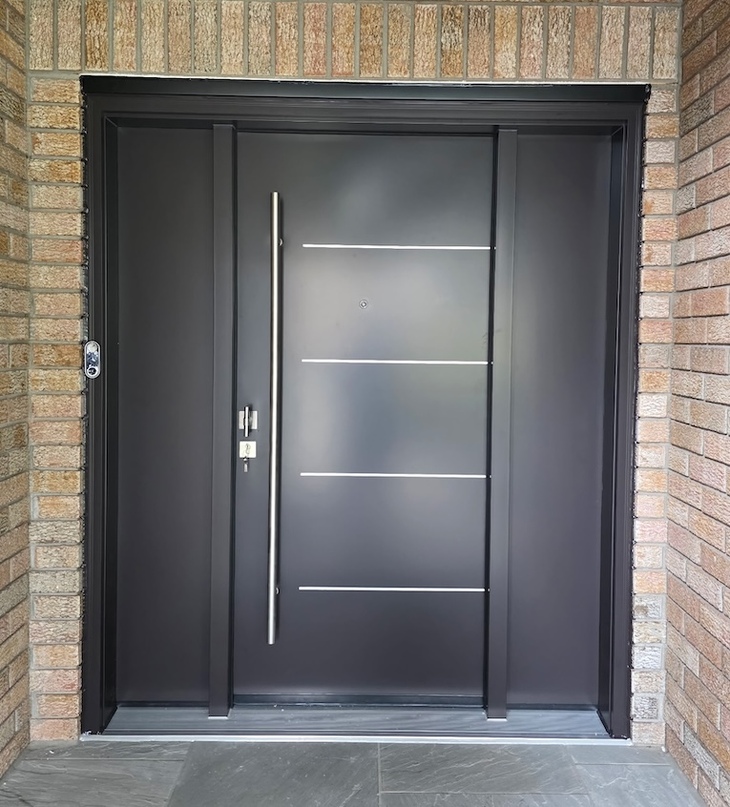
Matte black has become one of the most requested entry door hardware finishes in recent years, pairing well with modern and transitional homes, and offering strong contrast against light-coloured doors and siding.
Brushed nickel or satin chrome brings a cooler, more neutral tone that works across a wide range of architectural styles, particularly homes with grey, white, or blue exteriors.
Oil-rubbed bronze suits traditional and craftsman homes especially well, adding warmth without the high shine of polished metal.
Polished brass and warm gold tones have returned to popularity for homeowners wanting a more classic or formal look, and pair especially well with deep, saturated door colours.
Two-tone hardware, combining a darker handle with a lighter deadbolt or vice versa, has also become more common in recent years, though it is a look best chosen deliberately rather than ending up mismatched by accident.
How Hardware Finish Is Made: Plating vs. PVD
Standard electroplating applies a thin metallic layer to a base material through an electrochemical process and is the more common, lower-cost method used across most mid-range hardware lines.
PVD coating bonds the finish at a molecular level under vacuum conditions, producing a noticeably harder, more wear-resistant surface than standard plating, which is why it is typically reserved for premium hardware lines.
Matching Hardware to Your Home's Architecture
Modern homes generally suit matte black or brushed finishes, since the clean, understated look supports rather than competes with the simple lines common to contemporary design.
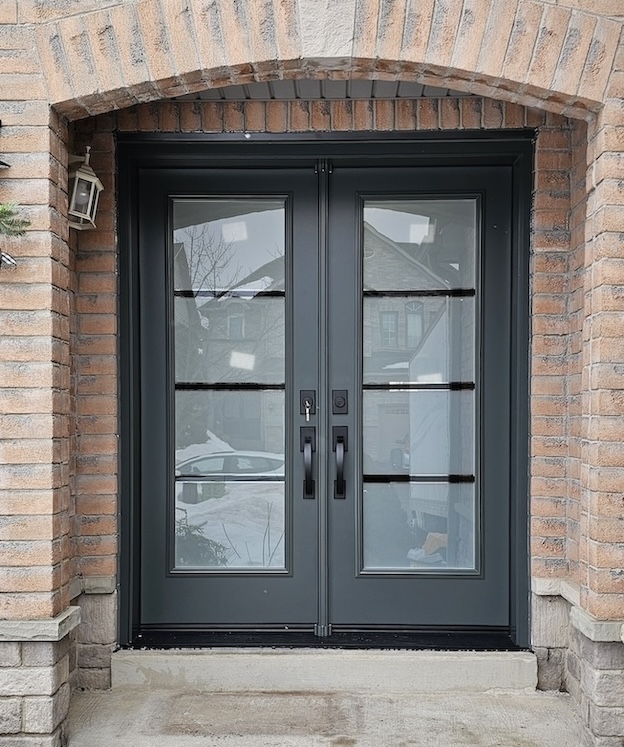
Traditional brick homes tend to pair well with warmer bronze or brass tones, which complement the natural warmth of the brick itself rather than contrasting sharply against it.
Craftsman and character homes often look best with classic hardware pairings, oil-rubbed bronze or aged finishes that read as intentional rather than trend-driven.
Durability of Different Finishes in Ontario Weather
PVD, or physical vapour deposition, coatings bond a finish to the base metal at a molecular level, which generally holds up far better against fading, tarnishing, and wear than standard electroplating.
Exposure to salt air, more relevant near the lake, along with the repeated temperature swings typical of a GTA year, can accelerate wear on lower-quality finishes, making the coating method worth asking about, not just the colour shown in a showroom.
A simple question to ask a supplier is whether the finish carries a specific wear or corrosion warranty, since a manufacturer willing to stand behind a finish for a defined number of years is generally signalling real confidence in its durability.
Common Hardware Mistakes Homeowners Make
Mismatching the finish between handle, hinges, and lock is one of the most common and most noticeable mistakes, since even a subtle mismatch stands out once you know to look for it.
Choosing a trendy finish without checking long-term durability can leave a homeowner replacing hardware sooner than expected, particularly with lower-quality coatings exposed to direct weather.
Overlooking the deadbolt and multi-point lock finish is an easy oversight, since these pieces are often ordered separately from the handle and can end up in a slightly different metal tone if not specified carefully.
Buying hardware in stages, a handle now and hinges later, is another common way mismatches happen, since finish lines can shift subtly between production runs even within the same manufacturer.
Why Work with Vinyl Light on Your Entry Door
Vinyl Light offers a range of hardware finish options across the entry door product line, which makes it straightforward to specify a consistent look across the handle, hinges, and lock in a single order.
Our team guides you on pairing hardware with door colour and home style, helping you avoid common mismatches that only become obvious after installation.