
One of the most important homeowners’ concerns is the right type of windows for the dining room. The dining room plays a crucial role in creating many of our most treasured family memories, including gatherings with friends, family dinners and holiday celebrations.
There are a lot of things to take into account regarding windows when deciding what kind of atmosphere you want to create in your dining room.
Please, read more by visiting these links:
- How to choose windows for bedroom?
- How to choose windows for the living room?
- How to measure windows for replacement: 5 steps guide

What Kind of Windows Are Commonly Used in Dining Rooms?
The type of windows used in dining rooms might vary depending on personal preferences as well as the general layout and style of the area.
The following are the most picked types of windows for the dining room:
- Casement windows, these windows open outward and are hinged on one side to provide optimal ventilation. They are frequently utilized in both traditional and modern designs and can offer a clear perspective.
- Double-hung windows, the top and bottom halves of these windows can be opened thanks to their two vertically sliding sashes. They are a timeless option of window styles for the dining room that complement many architectural motifs.
- Bay or Bow windows have brilliant window design for the dining room. They can provide the dining room with more architectural interest and a broader perspective of the surroundings.
- Picture or fixed windows are frequently chosen by homeowners who like to optimize natural light and scenery because they are made to offer an unhindered view of the outdoors.
- Sliding windows, they do not extend outward when opened, they are an excellent option when space is at a premium.
- Transom and arched windows are usually situated above doorways or other windows, transom windows are smaller and positioned horizontally. They can increase the amount of natural light in the space without sacrificing seclusion.

What to Look for When Choosing Windows for the Dining Room?
Here are some guidelines on what to consider when selecting new windows for your dining room:
-
The architectural style of your house.
Take into consideration your home's architectural style while choosing the windows for your dining room. It's not enough to have a large number of windows in your dining room; make sure the windows you choose complement the overall style and age of the property. Regardless of the design of your house - modern or classic - choose windows with hues, forms, glass, and trim complementing the aesthetic.
-
Interior design.
Your windows’ design is just as important as their external appearance. It is important that the windows you choose complement the walls, ceilings, and floors, so while making your selection, take space and proportions into account. With a big opening choose a bay window for the dining room as well as a picture window for the dining room.
-
Function and goal.
The main purposes of windows are to let in light and regulate ventilation in a space. Because windows differ in style, the purpose they perform will depend on whatever type you choose. Think about if you want an unobstructed view, increased light, ventilation, or all of these before selecting which window to buy. If the opening is not large, consider small windows for the dining room, as an example small picture window for the dining room combined with sliders for the ventilation.
-
Window material.
Windows come in a few material possibilities, each with advantages and disadvantages. The most popular option for materials is vinyl. Vinyl windows are our top pick because they are easy to maintain, conductive-free, long-lasting and can be customized to match the style and appearance of your home.
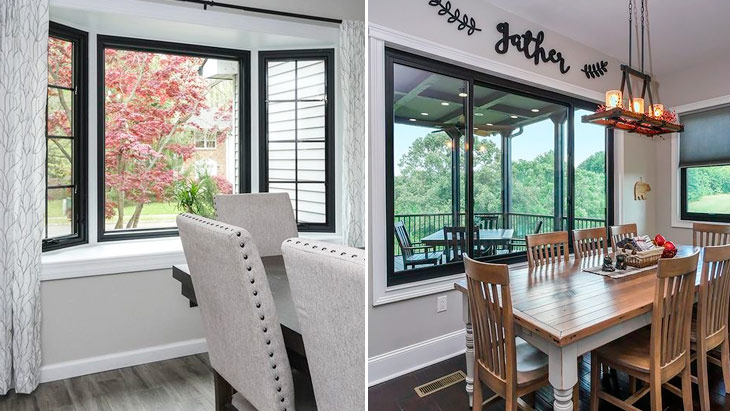
Window Ideas for Dining Room
The design of the space, the amount of natural light you want, privacy concerns and your own tastes all play a role in choosing the replacement window ideas for the dining room.
The following are some well-liked dining room window options:
- Casement Windows:
Pros: When closed, they provide a tight seal and offer a clear view and decent ventilation.
Cons: When opened outward, it may obscure views.
- Bay or Bow Windows:
Pros: Bay windows provide an excellent panoramic view! Bay window ideas for the dining room also provide more natural light and architectural appeal.
Cons: Ideas for bay windows in the dining room might need more room and can be pricey.
- Sliders:
Pros: Easily operated, sleek appearance and capable of offering adequate airflow.
Cons: Compared to casement windows, they can only be opened with some limitations.
- Picture Windows:
Pros: Provide unhindered views and abundant natural light.
Cons: It isn't possible to open it for airflow.
- Double-hung Windows:
Pros: Adaptable, simple to maintain and provide bottom and top ventilation.
Cons: Compared to picture windows, it could obscure views.
- Transom Windows:
Pros: Sort of additions over windows or patio doors to offer light without obstructing privacy.
Cons: Don't usually offer ventilation.
- Windows with Stained Glass:
Pros: Uniquely disperse light and add visual attractiveness.
Cons: There isn't much natural light or scenery.
- Windows with Frosted or Tinted Glass:
Pros: Offer privacy while letting light through.
Cons: May lessen the quantity of the outside that is viewed.
Keep in mind that window treatments such as California shutters or roller shades are the perfect addition to add style and privacy for your dining area. Contact Vinyl Light to see the options.

How Much Does It Cost to Replace a Dining Window?
Our professionals at Vinyl Light Windows and Doors can assist you if you want to get new windows or sliding/French doors for your dining room! We are here to help you with finding an ideal set of windows for the dining room for your upcoming home makeover.
Here are some factors which are suggested to be considered upon choosing a window for the dining room cost:
- Window Type, the price will vary depending on the kind of window you select. Casement, sliding, bay, single-hung, double-hung, and casement windows are common varieties. The price of the materials and installation varies for each depending on the size, glass thickness, frame color etc.
- Size, replacing larger windows typically results in higher costs than smaller ones. If the window opening needs to be adjusted, the size of the opening could also affect how much it costs.
- Installation, depending on the intricacy of the task, the installation fee may change. The replacement will cost more if it needs more work done, such as enlarging the opening or fixing structural problems.
- Location, the total cost might be affected by local labor rates as well as the location of the project, long distance costs extra.
- Customization, the cost will probably go up if you want unique features or patterns for your dining window.