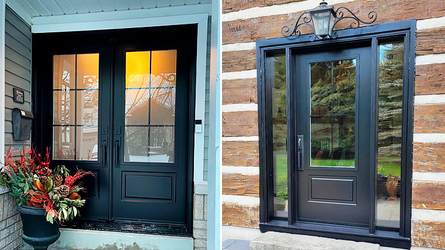

Drafty doors are one of the most common reasons homeowners feel uncomfortable inside their own homes — especially during fall and winter in Ontario. A cold draft near an entry door is often dismissed as “normal,” but in reality, it is a sign that heated air is escaping, and cold outdoor air is entering the house uncontrollably.
Even very small gaps around a door can cause noticeable heat loss. Over time, this results in higher energy bills, uneven indoor temperatures, moisture issues, and unnecessary wear on your heating system.
This guide explains, in clear, practical terms, why doors become drafty, how to identify the exact source of air leaks, which solutions work, and when replacement is the smarter option.
Key Takeaways
- Drafty doors are a major source of heat loss
- Small gaps cause big energy waste
- Most drafts can be fixed with proper sealing
- Sliding and French doors need specialized solutions
- Old doors are often better replaced than repaired
What Does “Drafty Door” Actually Mean?
A drafty door is not simply a door that feels cold. It is a door through which air moves freely between the door, the frame, and the surrounding structure.
Exterior doors are designed to provide a sealed barrier between indoor and outdoor spaces. When that seal is compromised, outside air follows pressure differences and enters the home.
This air movement happens because of:
- wind pressure,
- temperature differences,
- natural air circulation inside the house.
The result is a constant flow of cold air in winter (or hot air in summer), even when the door is closed.
Why Doors Become Drafty Over Time
Doors are not static elements. They move, age, and wear — especially in a climate with large seasonal temperature swings like Ontario.
Main Causes Explained in Plain Language
| Cause | What It Means for You as a Homeowner |
|---|---|
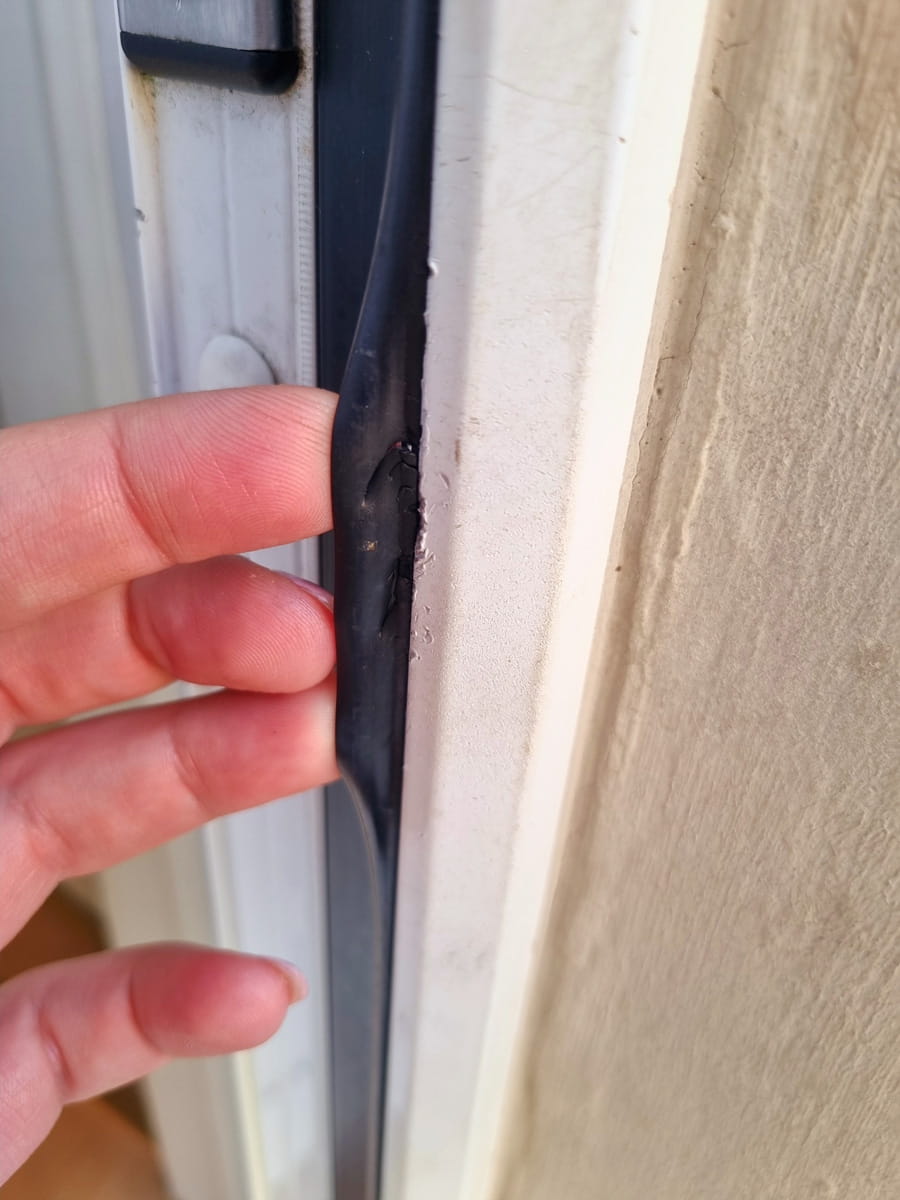
| Worn weatherstripping | The soft seal that blocks air has flattened, cracked, or fallen off, allowing air to pass |
| Loose hinges or misalignment | The door no longer sits tightly in the frame, creating gaps |
| Missing or damaged door sweep | Cold air enters under the door near the floor |
| Improper sill height | The bottom seal cannot compress properly |
| Old door construction | Older wood doors lack insulation and allow heat transfer |
| Rotten or damaged frame | Structural gaps allow air and moisture to enter |
Why this matters:
Even a gap as thin as a few millimetres can allow a surprising amount of cold air into the house, especially during windy conditions.
Why Drafty Doors Are a Serious Problem (Not Just an Annoyance)
Drafts affect more than comfort. Over time, they create measurable financial and structural consequences.
Real Impacts on Your Home
- Higher heating costs — your furnace works harder to compensate for heat loss
- Cold floors and uneven temperatures — especially near entry points
- Moisture and condensation — which can lead to mould or rot
- Easier entry for insects and pests
- Reduced the lifespan of HVAC equipment
Sealing drafts is one of the most cost-effective energy improvements a homeowner can make.
How to Find Drafts Around Your Door (Step by Step)
Before fixing a draft, you need to know exactly where the air is entering. You do not need special equipment.
Flame Test (What It Shows)
By moving a small flame along the door edges, you can see where air is moving. If the flame flickers or bends, air is flowing at that spot.
This identifies the precise location of the leak, enabling targeted repairs rather than guesswork.
Paper Test (Why It Works)
A thin piece of paper reacts to air movement. If it flutters or moves near a closed door, the area is not properly sealed.
How to Fix a Drafty Front Entry Door
Most front door drafts can be solved by improving the door’s sealing system, not by replacing the entire door.
Most Effective Solutions — Explained Clearly
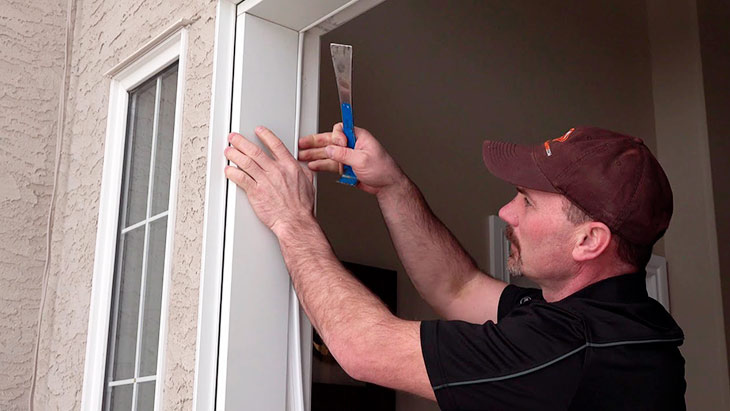
- Replacing Weatherstripping
Weatherstripping creates a compressible seal between the door and the frame.
Why it works:
When the door closes, the seal compresses, blocking airflow. Old weatherstripping loses elasticity and no longer seals gaps.
Benefit to homeowner:
Low cost, fast installation, and immediate comfort improvement. - Installing or Adjusting a Door Sweep
A door sweep seals the gap at the bottom of the door.
Why it works:
Cold air naturally enters near the floor. A properly adjusted sweep block this path without preventing the door from opening smoothly. - Using Foam Tape
Foam tape fills uneven gaps that standard weatherstripping cannot.
Why it works:
Some doors and frames are not perfectly straight. Foam tape adapts to irregular surfaces and prevents air leakage. - Reapplying Exterior Caulking
Caulking seals the gap between the door frame and the wall.
Why it works:
Over time, old caulking dries out and cracks. New caulking restores the airtight barrier around the frame. - Door Snake (Temporary Measure)
A door snake blocks airflow at floor level.
Important to understand:
This does not fix the problem — it only masks it temporarily.
How to Fix Drafty Sliding Glass Doors
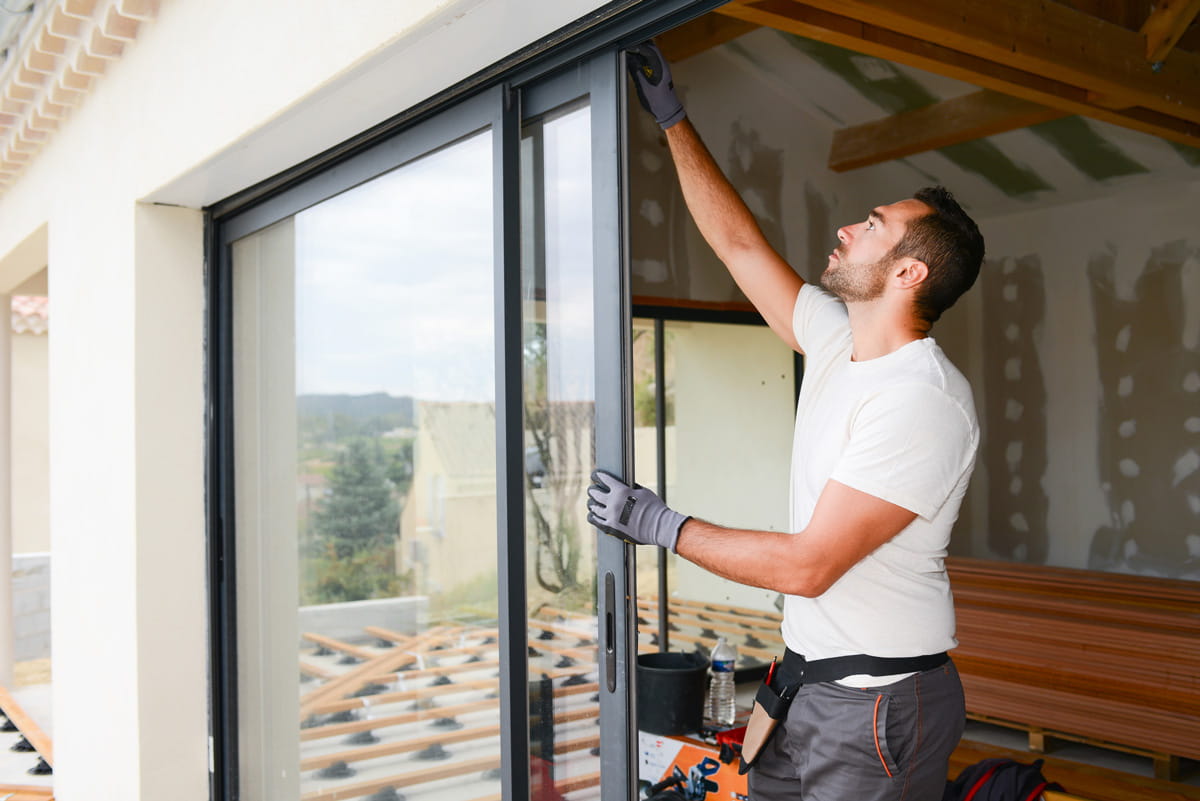
Sliding doors are more prone to drafts because they rely on brush-style seals and tracks rather than compression.
Effective Solutions Explained
| Solution | Why It Helps |
|---|---|
| Track cleaning | Dirt prevents the door from closing tightly |
| Pile weatherstripping | Designed specifically for sliding systems |
| Thermal curtains | Reduce heat loss through large glass areas |
| Plastic insulation kits | Temporary winter solution |
| Re-caulking | Seals air gaps around the frame |
Important note:
These solutions reduce drafts, but older sliding doors are rarely airtight by modern standards.
How to Fix Drafty French Doors
French doors have more joints, which means more opportunities for air leaks.
Best Practices Explained
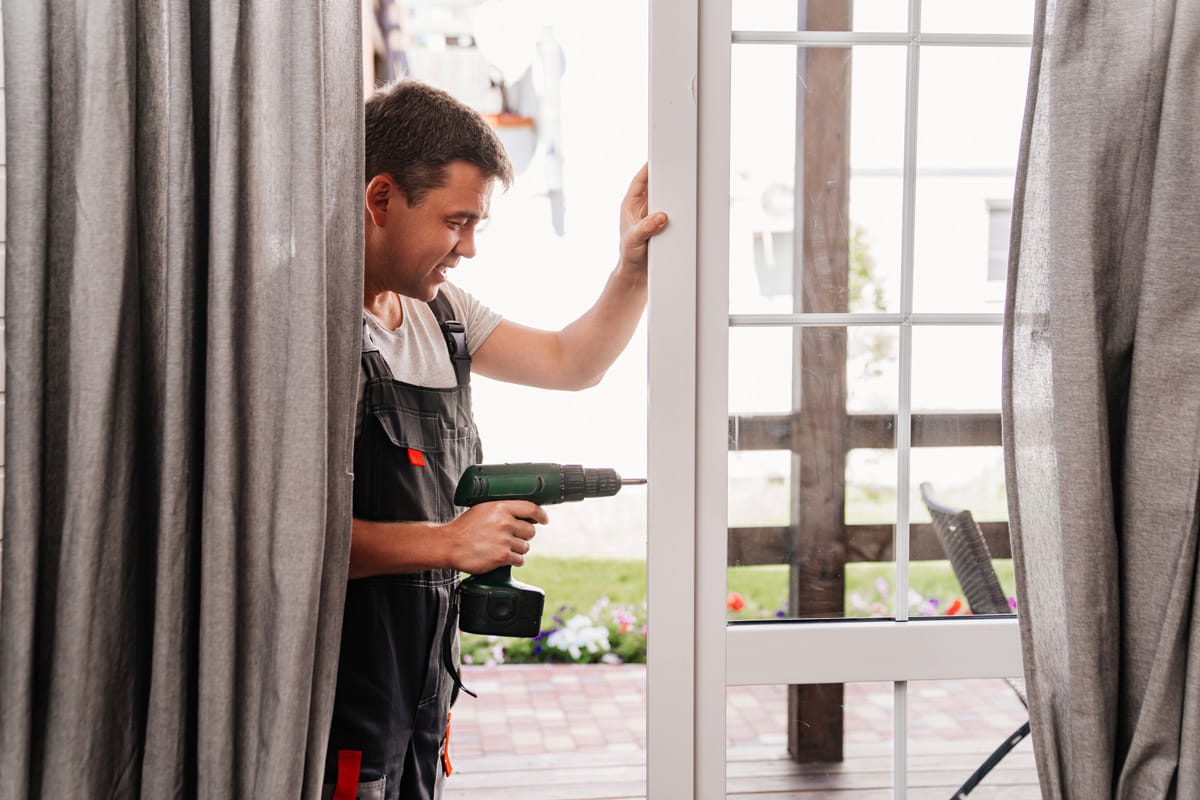
- Adjust alignment so both doors close evenly
- Tighten hinges to eliminate sagging
- Install foam weatherstripping around the frame
- Seal cracks with caulk
- Add insulated meeting moulding where doors meet
- Install bottom sweeps without scraping the floor
Proper sealing improves comfort without compromising usability.
How to Prevent Drafty Doors in the Future
Prevention is easier — and cheaper — than repeated repairs.
Long-Term Prevention Tips
- Inspect doors before winter
- Replace worn seals early
- Address frame damage promptly
- Consider door replacement when sealing no longer works
When Door Replacement Is the Best Solution
If drafts persist despite proper sealing, the problem is usually insulation or door construction, not the seals.
Why Modern Doors Perform Better
Modern steel and fibreglass doors are:
- foam-insulated,
- structurally stable,
- engineered for airtight performance.
Benefits for Homeowners
- Lower energy bills
- Consistent indoor temperatures
- Elimination of drafts
- Less maintenance
- Increased comfort and home value
Frequently Asked Questions
Why do doors become drafty over time?
Doors shift due to temperature changes, structural settling, and wear of seals and hardware. Over time, gaps form that allow air to pass through.
Can sealing a door really reduce energy bills?
Yes. Sealing air leaks reduces heat loss, allowing your heating system to run more efficiently and lowering energy costs.
Is weatherstripping enough to fix a drafty door?
In many cases, yes. However, if the door or frame is damaged or poorly insulated, weatherstripping alone may not be sufficient.
Are sliding doors always drafty?
Not always, but older or poorly maintained sliding doors are more prone to drafts due to worn seals and track issues.
When should I replace a drafty door rather than seal it?
If sealing does not improve comfort, or if the door is old, uninsulated, or structurally damaged, replacement is usually the better long-term solution.