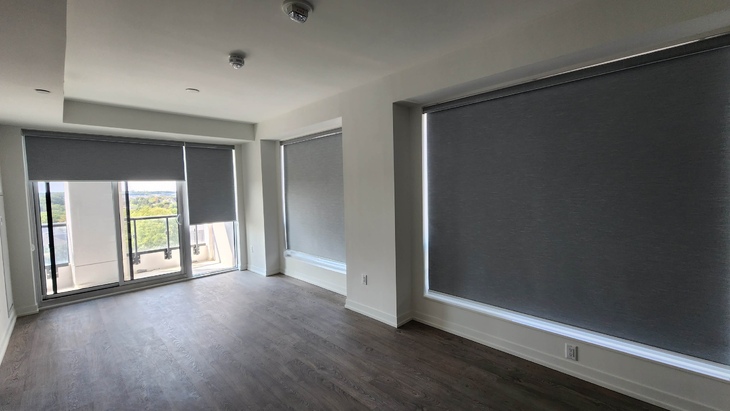

Motorized blinds and smart shutters add real convenience and can trim energy use by automatically responding to sunlight, but they cost more than manual options. For most GTA homeowners, the upgrade makes sense for hard-to-reach windows, large picture windows, and rooms where light control most affects comfort or energy bills.
As more window treatment brands add app and voice control, it is becoming easier to retrofit a home rather than build automation in from the start. This guide covers what motorized blinds and smart shutters actually offer, how they work with vinyl windows, and where the cost is easiest to justify.
Interest in these systems has grown alongside broader smart-home adoption, and GTA homeowners renovating a living room or primary bedroom increasingly ask about motorization when choosing new windows, rather than treating it as a separate, later purchase.
Key Takeaways
- Motorized blinds and smart shutters use a small motor and an app, remote, or voice control instead of a manual wand or cord.
- They can integrate with existing California shutters or roller shades, or be installed as part of a new window project.
- Real benefits include convenience, meaningful energy savings on sun-exposed windows, and added security while a home is empty.
- Motorized window treatments carry a real cost premium over manual options in the GTA market.
- The upgrade is worth it on some windows and rooms more than others, and manual remains the practical choice elsewhere.
What Are Motorized Blinds and Smart Shutters?
Motorized blinds and smart shutters use a built-in motor to open, close, or tilt the slats, instead of a manual pull cord, wand, or crank. The motor is controlled remotely rather than by hand at the window.
They differ from standard California shutters, roller shades, and zebra blinds mainly in how they are operated. The physical slats, louvres, or fabric can look nearly identical to a manual version. What changes is the mechanism moving them.
Control options typically include a dedicated remote, a smartphone app, or voice commands through a smart-home assistant. Some systems also support scheduling, so blinds open and close automatically at set times or in response to sunlight.
A growing number of systems also include light sensors, allowing blinds to adjust automatically as outdoor brightness changes throughout the day rather than relying on a fixed schedule alone. This is particularly useful on south- and west-facing rooms where direct sun shifts significantly between morning and afternoon.
Power comes from either a rechargeable or replaceable battery pack built into the headrail, or a hardwired connection run during installation. Battery-powered systems are easier to retrofit into an existing home, while hardwired systems avoid ever needing to change a battery.
How Motorized Blinds Work with Vinyl Windows
Mounting a motorized system to a vinyl window frame works much like mounting a manual one, using brackets fastened to the frame or surrounding trim. The motor's added weight is modest and typically doesn't require reinforcement on a standard residential window.
Compatibility with existing blind and shutter product lines depends on the specific manufacturer. Some California shutter and roller shade lines offer a motorized version of the same product, which makes it straightforward to match new motorized units to shades already installed elsewhere in the home.
Retrofitting an existing window with motorized blinds is generally simpler than it sounds, since most systems mount to the same hardware points as a manual version. Adding motorization to a new window project can be even cleaner, since you can plan wiring or charging points from the start if you choose a hardwired system.
For a bay or bow window with several individual sashes, motorization usually means one motor per section, coordinated through a single remote or app profile so the whole group can be operated together or independently as needed.
Benefits: Convenience, Energy Savings, Security
- Scheduled opening and closing lets blinds manage heat gain and loss automatically, closing on hot afternoons to block direct sun and opening on winter mornings to let warmth in, without anyone needing to remember.
- Convenience is most obvious on windows that are difficult to reach by hand, including bay and bow windows, large picture windows, and high casement windows above stairs or vaulted ceilings.
- While you're away, automated movement on a schedule adds a security benefit, since blinds and shutters opening and closing at normal times help a house look consistently occupied.
Energy savings from motorized blinds complement the window's performance rather than replacing it. A well-insulated vinyl window with argon fill and Low-E glass still does the primary work; automated shading adds a second layer of control.
What Motorized Blinds and Shutters Cost in the GTA
Motorized options generally cost more than manual California shutters or roller shades of the same style, since the price includes the motor, battery or wiring, and the control hub or app integration.
The biggest cost drivers are how many windows you automate, the motor type you choose, and whether the system needs to integrate with a broader smart-home setup rather than operating on its own.
Motorized vs. Manual: Which Should You Choose?
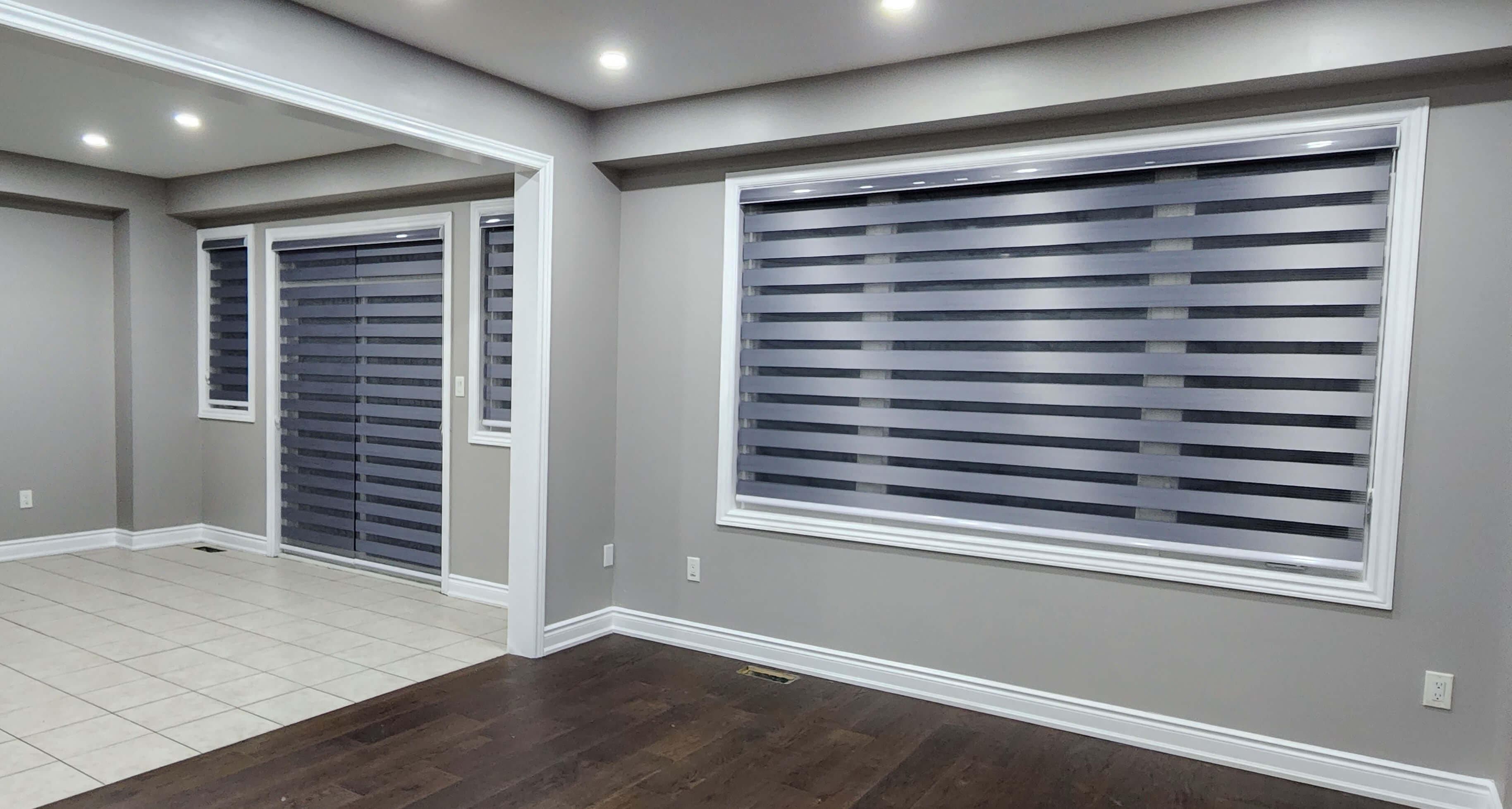
Motorization usually makes the most sense on bay and bow windows, large picture windows, and rooms like a living room or primary bedroom, where light control has a real effect on comfort or glare throughout the day.
Manual operation remains the practical choice on smaller, easily reached windows, and in rooms where the cost of automation is harder to justify against how often the blinds are actually adjusted.
A mixed approach is common in practice: motorizing windows that are genuinely hard to reach or get the most direct sun, while keeping manual operation on smaller or easily accessed windows elsewhere in the home.
Maintenance on a motorized system is generally light, limited to charging or replacing batteries on a battery-powered unit, or an occasional firmware update through the app.
Why Pair Smart Window Treatments with Vinyl Light Windows
Energy-efficient vinyl windows and smart shading work together, not against each other. The window's argon fill and Low-E coating reduce baseline heat transfer, and scheduled shading adds an extra layer of control over daytime solar gain.
Custom sizing for bay, bow, and picture windows means motorized treatments can be specified to fit exactly, which matters most on the larger, harder-to-reach windows where automation adds the most convenience.