
Why are you rushing to shut your windows the second a summer shower begins? Most homeowners assume a downpour means the end of fresh air, but the right awning window changes that rule instantly. You shouldn't have to choose between a cool breeze and a dry floor. If you're currently staring at condensation between your panes or feeling a chill every time the wind blows, you know your old windows are failing. High energy bills and poor airflow aren't just annoyances; they're clear signs it's time for a professional upgrade that actually performs.
We understand the frustration of drafty frames and the desire for a home that stays comfortable without breaking the bank. You want a durable, low-maintenance solution that delivers real financial value. Discover how modern awning windows provide superior ventilation, maximum energy efficiency, and a contemporary style that transforms your renovation project. This article breaks down the 25 critical questions you must ask a window replacement company before you sign any contract. We'll walk you through the technical specs, installation standards, and warranty details you need to secure a best-in-class result for your Canadian home.
Key Takeaways
- Learn how the unique top-hinged design of an awning window allows for rain-protected ventilation and precise airflow control during your home renovation.
- Compare awning and casement styles to determine which airflow pattern and hinge placement best suits your home's specific room layout and cooling needs.
- Identify the technical specifications required for maximum energy efficiency, including multi-chambered vinyl frames and advanced triple-glazing packages.
- Master the 25 essential questions to ask your installer to ensure a stress-free experience and a lifetime of window durability in the Canadian climate.
- Understand the financial and quality advantages of choosing a factory-direct manufacturer to eliminate unnecessary middleman markups and maximize your project budget.
Understanding Awning Windows: Design, Mechanics, and Modern Function
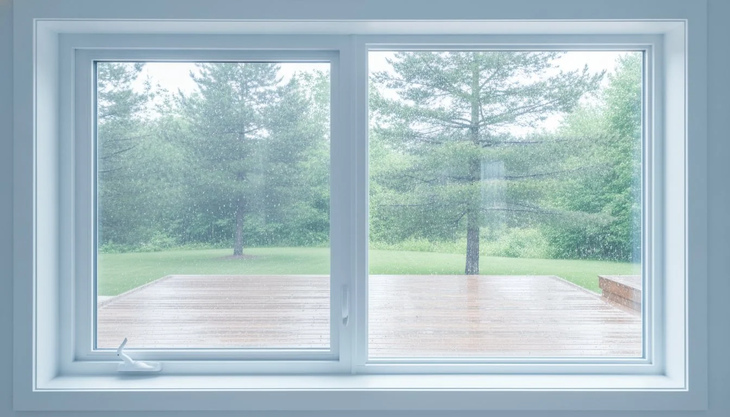
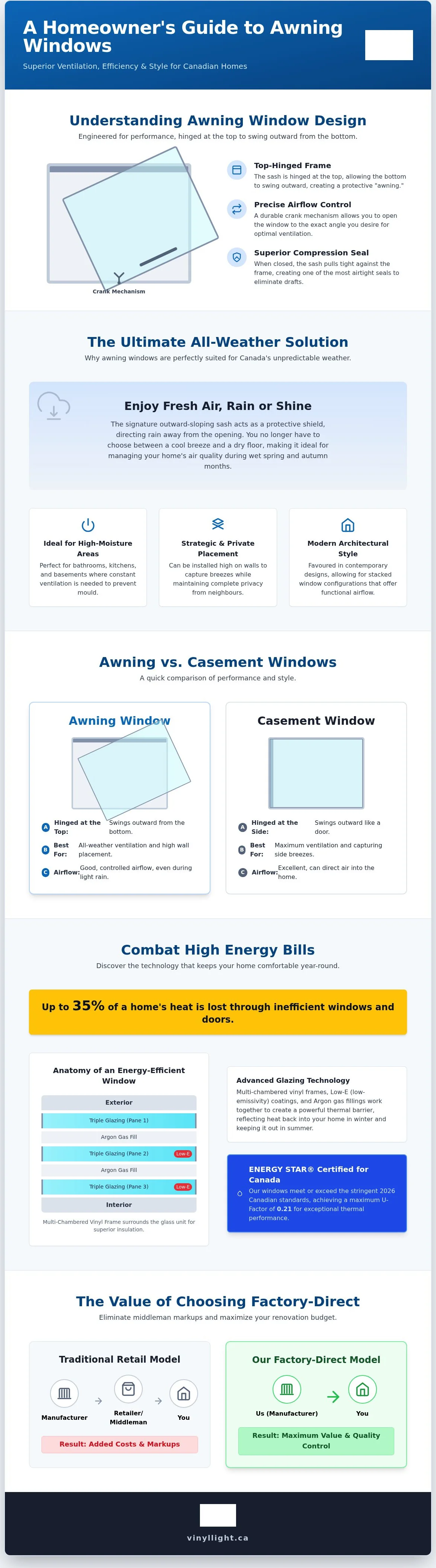
An Awning Window Design is fundamentally different from your standard slider or hung window. It's hinged at the top and swings outward from the bottom, creating a sloped "awning" effect. This is a brilliant engineering choice for the Canadian climate. When it rains, the glass sash acts as a natural shield. You can keep the window open for fresh air without worrying about water damage to your interior sills or flooring. It's a functional, no-nonsense solution for homeowners who value airflow regardless of the forecast.
The real magic happens with the crank mechanism. Unlike windows you have to shove or pull, an awning window uses a precision-engineered handle. This allows you to set the exact opening angle you need. Want a tiny sliver of air? Just a few turns. Need a full gust? Crank it all the way. This design also incorporates a high-performance compression seal. When you close the window, the sash is pulled tight against the frame. It doesn't just sit there; it compresses. This makes it one of the most airtight styles available today, virtually eliminating the drafts that drive up your heating bills.
The Mechanics of a Top-Hinged Window
Modern vinyl frames utilize a heavy-duty scissor-arm operator to manage the weight of the glass. This hardware is built for durability and smooth operation over decades of use. Because the hinge is at the top, the weight of the sash actually helps the window stay closed. Gravity works with the multi-point locking system to ensure the bottom edge stays flush against the weatherstripping. The awning window mechanism serves as a gravity-assisted weather barrier. This structural advantage means fewer repairs and a tighter seal against the harsh Canadian winter.
Ideal Placement for Maximum Airflow
Awning windows are the masters of strategic placement. Because they don't require the same horizontal width as a slider, they favour vertical wall space. You'll often see them installed high on a wall. This position captures cooling breezes while maintaining total privacy from neighbours. It's a savvy way to brighten a room without exposing your living space to the street.
They are essential in high-moisture areas like bathrooms, kitchens, and basements. In these spaces, constant ventilation is required to prevent mould and condensation. Since you can leave them open during a light rain, you never have to sacrifice air quality for weather protection. They are also a favourite in modern architectural designs where homeowners want to stack windows to create a wall of glass that still offers functional, controlled airflow.
The Practical Benefits of Installing Awning Windows in Canada
Canadian weather is notoriously unpredictable. You need a window that works as hard as your furnace to keep your home comfortable. An awning window is the ultimate ventilation workhorse for our climate. It offers a level of functionality that sliders and hung windows simply can't match. When you invest in these units, you aren't just buying glass; you're buying a strategic upgrade for your home's envelope.
Weather Protection and Rain Ventilation
Why should you be forced to close your windows just because it's drizzling? The outward-sloping sash on an awning window acts like a protective umbrella. It directs water away from the opening while allowing fresh air to circulate freely. This is vital during wet Canadian spring and autumn months when indoor humidity can spike. High humidity leads to condensation and mould, which damages your walls and impacts your health. By keeping the air moving even during a downpour, you effectively manage your home's indoor air quality. Our heavy-duty vinyl frames are specifically built for this moisture; they won't rot, warp, or peel like old wood or thin aluminum frames.
Maximizing Energy Efficiency with ENERGY STAR Certification
Heating and cooling costs are a major concern for every homeowner. Research shows that up to 35% of a home's heat is lost through inefficient windows. Our window units feature multi-chambered vinyl frames designed to trap air and provide a superior thermal break. To meet the stringent ENERGY STAR standards in Canada for 2026, a window must achieve a maximum U-factor of 0.21. We hit these targets by utilizing advanced Low-E coatings and Argon gas fillings between the panes.
This technology reflects heat back into your home during the winter and blocks solar gain during the summer. Because of the compression seal design, these windows have significantly lower air infiltration rates than sliding windows. You'll see the results on your monthly utility bills almost immediately. If you're ready to upgrade your home's performance, it's time to explore high-efficiency window options that fit your renovation budget.
Security and aesthetics also get a major boost with this style. These windows include multi-point locking systems that secure the sash at several spots along the frame, making them incredibly difficult to jemmy from the outside. Beyond safety, you enjoy a completely unobstructed view. Unlike single or double-hung windows, there's no horizontal meeting rail cutting through your sightline. You get a clear, clean look at the outdoors through a single, solid pane of glass.
Awning vs. Casement Windows: A Performance and Style Comparison
Should you choose a side-hinged casement or a top-hinged awning window for your next renovation? Both styles represent the gold standard of energy efficiency in Canada, yet they solve very different architectural problems. Choosing the wrong one can lead to poor airflow or awkward operation. We believe in getting the technical details right the first time so your investment pays off for decades.
To help you decide, we have broken down the primary differences between these two high-performance options:
- Hinge Placement: Casements hinge on the side; awnings hinge at the top.
- Airflow Pattern: Casements scoop air from the side of your home; awnings catch breezes from the bottom and sides.
- Exterior Clearance: Casements require a wide swing path; awnings stay closer to the exterior wall.
- Ideal Geometry: Casements suit tall, narrow openings; awnings are the best choice for wide, short openings.
Structural Differences and Hinge Placement
Why are awning windows often preferred for smaller, wider openings? It comes down to the mechanical load on the frame. A wide sash is heavy. When you hinge a wide window on the side, like a casement, it puts immense strain on the hardware, which eventually leads to sagging. By hinging that same wide sash at the top, the weight is distributed evenly across the frame. This ensures smooth operation and a tighter seal over time. From an aesthetic perspective, the horizontal lines of an awning window complement modern Canadian architecture, while casements often lean toward a more traditional, vertical look. If your home has narrow walkways or a deck right outside, the awning's compact opening path prevents it from becoming an obstacle.
Choosing Based on Room Dimensions
Are you dealing with a massive wall in a living room or bedroom? A common strategy involves using a combination of fixed picture windows and awning units. Placing an awning at the bottom or top of a large fixed pane allows for ventilation without sacrificing the view. This setup is particularly effective in basements where egress height is limited. Because an awning opens from the bottom, it provides a functional vent even in tight window wells.
While a casement window acts as a scoop to pull air in from the side of the house, the awning window serves as a shield that allows air to enter from the bottom while keeping the elements out. This makes the awning style superior for rooms where you want constant, low-level airflow. They are also much easier to operate over obstructions. If you have a deep kitchen counter or a sofa in front of the window, the crank handle at the bottom of an awning is far more accessible than reaching for the side latch of a casement.
Customizing Your Vinyl Windows for Energy Efficiency and Style
Choosing the right specs for your awning window is where you turn a standard renovation into a high-performance home upgrade. You shouldn't settle for generic, off-the-shelf solutions that aren't built for our unique climate. Modern vinyl frames allow for total customization. This ensures your new windows look as good as they perform while standing up to the toughest weather conditions.
Low-E Glass and Argon Gas Insulation
Why do some rooms always feel colder than others? It's usually the glass. High-performance windows utilize Low-E (low-emissivity) coatings to reflect radiant heat back into your living space during the winter. In the summer, this same coating blocks solar heat from entering your home. To maximize this effect, we use Argon gas in the centre of the unit. This dense, non-toxic gas replaces regular air between the panes to prevent convection currents. These features work together to eliminate cold spots and reduce the drafty feeling often associated with older glazing. While double glazing is the baseline, many Canadian homeowners now choose triple glazing to meet the strictest energy standards and realize the highest possible savings on heating costs.
Aesthetic Choices: Colours and Grilles
Your windows define your home's curb appeal. While classic white remains a popular choice, bold frame colours like black and charcoal are currently leading the market. These darker tones provide a modern, high-contrast look that makes your awning window stand out as a design feature rather than just a utility. You can also add character through internal grilles. These are placed between the panes of glass, giving you the traditional look of divided lights without the nightmare of cleaning individual glass squares. This is a savvy way to organize your home's exterior aesthetic without adding to your maintenance to-do list.
Finish the look with premium hardware. We offer a variety of finishes to match your existing door handles and fixtures. This attention to detail creates a cohesive, high-end look throughout your property without the custom price tag. Before you commit to a design, make sure to request a quote for your custom vinyl windows to see how these options fit your project budget.
Finally, never overlook the weatherstripping. Professional-grade, multi-point weatherstripping is essential for maintaining that airtight compression seal. Without high-quality seals, even the best glass package will fail to deliver the energy efficiency you expect. Durability is the goal. We ensure every unit is built to withstand the freeze-thaw cycles that define the Canadian climate, providing a long-lasting seal that won't degrade over time.
The Value of Factory-Direct Awning Window Installation
Buying a new awning window is a significant investment in your home's infrastructure. You shouldn't trust that investment to a third-party contractor who didn't build the product. The smartest way to maximize your budget and ensure long-term performance is to choose a factory-direct model. When the manufacturer is also the installer, you eliminate the risk of miscommunication and technical errors that often plague big-box retail projects. This streamlined approach ensures that the person fitting your window understands its engineering better than anyone else.
Why Professional Installation is Essential
A high-performance window is only as good as its installation. Many homeowners consider DIY to save money, but the risks far outweigh the initial savings. Poorly fitted windows lead to air leaks, water damage, and eventually, a voided warranty. Our expert installers ensure every unit is perfectly level and square. This is critical for an awning window because the top-hinged sash relies on precise alignment to create an airtight compression seal when closed. If the frame is even slightly skewed, the hardware will strain, and the weatherstripping won't sit flush.
Thermal performance also depends on what happens behind the trim. Professional installation involves meticulous insulation of the rough opening. We use specialized materials to seal the gaps between the window frame and your home's structure, preventing thermal bridging. This ensures your ENERGY STAR-certified glazing actually does its job. We take pride in our craftsmanship and business efficiency, delivering a stress-free experience from the first measurement to the final seal.
The Benefits of Factory-Direct Pricing
Why pay for a middleman's overhead? Traditional window dealers and retail chains add significant markups to the products they sell. By choosing a factory-direct manufacturer, you bypass these unnecessary costs. This model allows us to use higher-quality materials, such as multi-chambered vinyl and premium hardware, while keeping the final price point competitive. You get a "best-in-class" standard without the retail premium.
Having a single point of contact simplifies everything. If you ever have a question or need a service adjustment, you aren't stuck between a manufacturer and a separate installation crew. You deal with one team that owns the entire process. This accountability is backed by the security of a lifetime warranty on residential projects. You can get a free estimate and see the factory-direct difference at Vinyl Light. We are proud to offer a transparent, "open-book" approach to pricing and quality. You deserve a durable, low-maintenance solution that protects your home and your wallet for years to come.
Upgrade Your Home with Confidence and Precision
Selecting the right window style is the first step toward a more comfortable, energy-efficient home. You now have the technical knowledge to distinguish between a standard replacement and a high-performance upgrade. Remember that the top-hinged design of an awning window offers unique rain protection and superior airflow that other styles simply can't match. By focusing on ENERGY STAR-certified efficiency and professional installation, you eliminate drafts and reduce your monthly utility costs for the long term.
We take pride in our no-nonsense approach to quality and pricing. Our factory-direct model means you get best-in-class materials and a lifetime warranty on all residential projects without paying for a middleman's overhead. You deserve a stress-free experience and a durable product that stands up to our harsh climate. Don't leave your home's comfort to chance. Book your free in-home estimate for premium awning windows today! We are ready to help you transform your renovation project into a lasting success.