
Energy efficiency isn't just a sticker on a glass pane; it's a structural system that determines whether your hard-earned money stays inside your home or leaks into the street. You've likely felt that telltale chill near a drafty frame or noticed condensation pooling on your sills during a deep freeze. It's frustrating to pay for heat that refuses to stay put. We understand that decoding the technical specs of energy efficient windows Ontario homeowners need can feel like a full-time job, especially with shifting standards and complex rebate rules.
This 2026 guide is your shortcut to total home comfort. You'll discover exactly how to select the highest-performing windows to slash your energy bills and master home insulation in the unique Canadian climate. We're pulling back the curtain on what actually drives performance, placing the window at the centre of your home's thermal defense. You'll learn how to identify the best materials like fiberglass or high-grade vinyl and how to leverage factory-direct pricing to maximize your investment. We'll preview the latest ENERGY STAR requirements and show you how to turn your house into a quieter, more valuable, and perfectly tempered sanctuary.
Key Takeaways
- Master the art of selecting the best energy efficient windows Ontario has to offer by understanding how advanced thermal barriers combat extreme Canadian temperature swings.
- Simplify the technical jargon by learning how to use U-Factor and Energy Ratings (ER) to predict your future utility savings accurately.
- Evaluate the industry-leading performance of vinyl versus the superior strength of fiberglass to determine which material best fits your budget and home's structure.
- Identify the most effective upgrade path for your property, from conducting a home energy audit to choosing between full-frame and retrofit installations.
- Learn how to navigate the 2026 government rebate landscape and leverage factory-direct pricing to ensure your project pays for itself through increased ROI.
Understanding Energy Efficient Windows in Ontario: Why They Matter
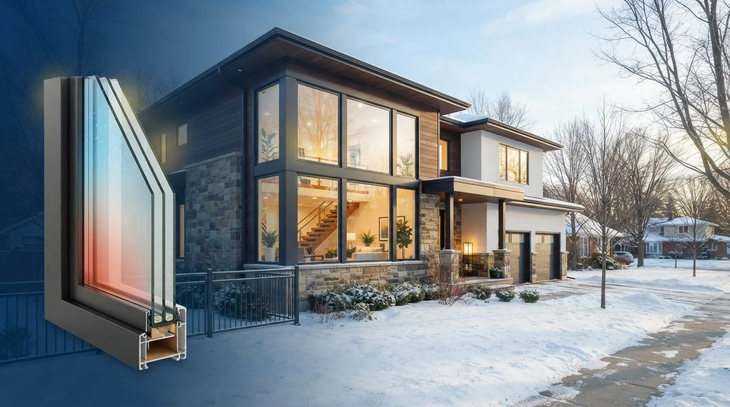
Ontario's climate is a relentless battleground for your home's comfort. One day you're facing a deep freeze; the next, an oppressive, humid heatwave. High-quality energy efficient windows Ontario homeowners choose act as the primary line of defence. They aren't just pieces of glass held by a frame. They are sophisticated, multi-component thermal barriers designed to keep your furnace's heat inside during January and the summer's humidity outside. Think of them as a transparent wall that works 24/7 to protect your indoor environment.
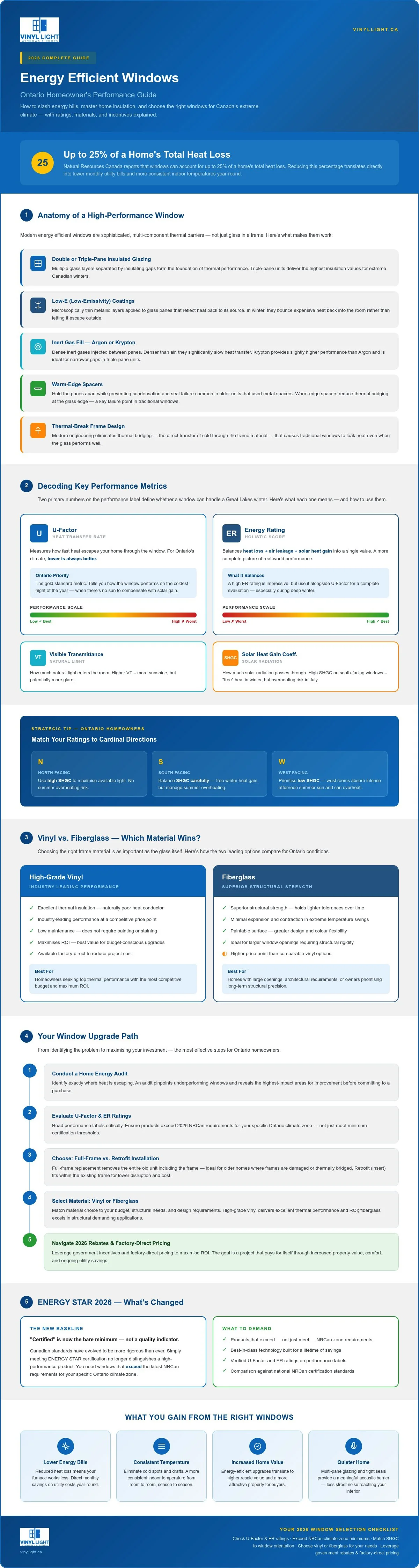
Traditional windows often suffer from thermal bridging, where cold transfers directly through the frame material. Modern engineering eliminates this flaw. By sealing air leakage points, you stop the literal "money out the window" scenario. Natural Resources Canada reports that windows can account for up to 25% of a home's total heat loss. Decoding the tech behind the energy efficient windows Ontario properties require ensures you don't overpay for underperforming products. Reducing that heat loss percentage translates directly into lower monthly utility bills and a more consistent indoor temperature year-round.
The Anatomy of a High-Performance Window
To achieve these results, manufacturers rely on advanced insulated glazing technology. This involves more than just adding a second or third pane. Low-E (low-emissivity) coatings are microscopically thin metallic layers that reflect heat back to its source. In winter, they bounce your expensive heat back into the room. Between these panes, we inject inert gases like Argon or Krypton. These gases are denser than air, which significantly slows down heat transfer. Finally, warm-edge spacers hold the panes apart while preventing the condensation and seal failure common in older units with metal spacers.
The Role of ENERGY STAR in 2026
By 2026, Canadian standards have evolved to be more rigorous than ever. Simply being "certified" is now the bare minimum for quality. You need windows that exceed the latest NRCan requirements for our specific climate zones. When you examine a performance label, focus on the U-Factor and the ER rating. These numbers tell the real story of how the window will perform in a freezing Ontario February. Don't settle for yesterday's standards. Demand best-in-class technology that delivers a lifetime of savings and comfort. Modern labels make it easy to compare products, but understanding the metrics is what truly empowers your purchase.
Decoding Key Metrics: ER Ratings vs. U-Factor
Don't let a sales brochure dazzle you with vague promises. You need to look at the cold, hard data on the performance label. Two primary numbers define the energy efficient windows Ontario homes require: the U-Factor and the Energy Rating (ER). Understanding the difference is the only way to ensure you aren't overpaying for a window that can't handle a Great Lakes winter. These metrics aren't just suggestions; they're the blueprint for your home's future utility costs.
The U-Factor measures the rate of heat transfer. Simply put, it tells you how fast heat escapes your home. For our climate, lower is always better. While the U-Factor focuses strictly on insulation, the ER rating offers a more holistic view. It balances heat loss, air leakage, and solar heat gain into a single value. You can verify these metrics through the official ENERGY STAR window certification standards in Canada to see how different brands stack up against national requirements.
Light and heat management involve two more crucial figures. Visible Transmittance (VT) tells you how much natural light enters the room. A higher VT means more sunshine but potentially more glare. Meanwhile, the Solar Heat Gain Coefficient (SHGC) measures how much solar radiation passes through the glass. In Ontario, you want to manage this carefully. High SHGC on south-facing windows can provide "free" heat in the winter, but it might turn your living room into a sauna during July.
Which Metric Should You Prioritize?
For Ontario homeowners, the U-Factor is the gold standard. While a high ER rating is impressive, the U-Factor tells you how the window performs on the coldest night of the year when there's no sun to provide solar gain. We recommend matching your ratings to the cardinal directions of your home. Use high SHGC windows on the North side to maximize light. For West-facing rooms that bake in the afternoon sun, prioritize a lower SHGC to keep cooling costs down. If you're unsure about the best configuration, consulting with a factory-direct expert can help you customize your order for maximum ROI.
Air Leakage Ratings: The Silent Efficiency Killer
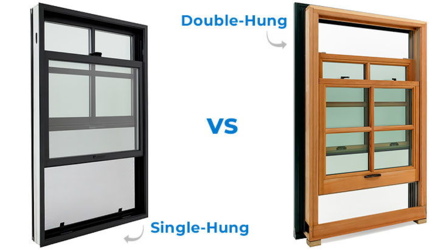
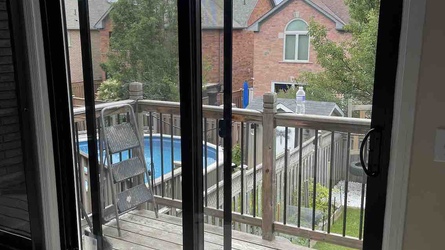
Even the most advanced glass technology fails if air leaks around the sash. This is why air infiltration ratings are critical. In the Canadian window industry, look for an A3 rating. This is the highest level of airtightness available. It's also worth noting that window style affects these results. Fixed casement windows or awning windows typically offer superior air seals because the sash is pressed firmly against the frame when closed. In contrast, sliding or double-hung windows rely on weatherstripping that can wear down over time. When selecting energy efficient windows Ontario, always prioritize the tightest seal possible to prevent drafts from stealing your comfort.
Vinyl vs. Fiberglass: Choosing the Right Energy-Efficient Material
Selecting the right frame material is just as critical as choosing the glass itself. In the harsh Ontario climate, your window frames must endure blistering summers and bone-chilling winters without losing their structural integrity. Both vinyl and fiberglass are top-tier choices for energy efficient windows Ontario homeowners depend on, but they offer different advantages depending on your home's needs and your budget. Understanding the thermal properties of these materials is the first step toward a smarter investment.
Frame materials significantly impact the overall thermal conductivity of your window system. While old-fashioned aluminum frames acted like a highway for heat loss, modern vinyl and fiberglass act as insulators. They prevent the frame from becoming a "cold spot" that attracts condensation. You can review the energy performance criteria for efficient windows to see how different frame designs contribute to meeting strict national standards. Both materials are virtually maintenance-free, meaning they won't rot, peel, or require painting over their long lifespan.
The Case for High-Quality Vinyl
Vinyl windows are the undisputed industry leader for cost-to-performance ratio. They provide exceptional insulation at a price point that makes sense for most residential projects. High-performance vinyl frames feature multi-chambered profiles. These internal cells trap air to create a series of insulation pockets that slow down heat transfer. To ensure a permanent, airtight seal, look for fusion-welded corners. This manufacturing process creates a single, solid piece of vinyl that never develops gaps or leaks. Modern vinyl is also treated with advanced UV stabilizers, so you don't have to worry about frames warping or discolouring in the sun.
When to Invest in Fiberglass
Fiberglass windows are the premium choice for those seeking maximum strength and longevity. Because fiberglass is composed of glass fibres and resin, it expands and contracts at nearly the same rate as the glass panes it holds. This minimal thermal expansion is a massive advantage during Ontario's extreme temperature swings, as it puts less stress on the seals. Fiberglass is also incredibly stiff, making it the ideal material for large picture windows or heavy bay windows that require superior structural integrity. Its strength allows for slimmer profiles, giving you more glass area and a sleek, modern aesthetic that enhances any home's curb appeal.
How to Improve Home Insulation with Window Upgrades
Buying the best energy efficient windows Ontario has to offer is only half the battle. If the installation is flawed, your investment is wasted. Achieving true thermal performance requires a systematic approach that starts before you even place an order. You must view your window as a component of a larger building envelope. When that envelope is breached by poor fitting or low-quality seals, your furnace works overtime to compensate. It's time to stop the drafts and take control of your home's climate.
The first decision you'll face is choosing between a full-frame replacement and a retrofit installation. A full-frame replacement involves removing the entire existing window, including the frame and brickmould. This is the gold standard for insulation. It allows installers to inspect the rough opening for hidden wood rot and apply fresh insulation directly to the wall studs. Retrofit or "insert" windows are faster and cheaper, but they rely on the integrity of your old frames. If you want to maximize your long-term ROI, the full-frame route is almost always the superior choice.
Step 1: The Professional Assessment
Never guess your measurements. A professional assessment identifies structural issues that a simple tape measure might miss. We look for signs of moisture infiltration and ensure the rough opening is square. This precision ensures a perfect fit, which minimizes the gap between the window and the wall. When the fit is tight, you require less spray foam, creating a more stable and airtight thermal bridge. This is also the stage where we help you select a glass package tailored to your home's specific orientation.
Step 2: Selecting the Right Style for Airflow
Not all window styles are created equal when it comes to insulation. Casement windows are the high-performance leaders because they use a compression seal. When you crank the window shut, the sash is pressed firmly against the frame, leaving zero room for air to bypass the weatherstripping. Fixed casement and picture windows go a step further by eliminating moving parts entirely, making them the most airtight options available. If you need ventilation but want to maintain a tight seal, awning windows offer a similar compression advantage while protecting your interior from light rain.
Step 3: The Airtight Installation Process
The final seal is where the magic happens. Professional installers use low-expansion spray foam to fill the cavity around the window frame. Unlike standard foam, this specialized product expands just enough to seal every crack without warping the new window frame. We then apply high-grade caulking to both the interior and exterior. This dual-seal approach prevents moisture from entering while keeping your conditioned air inside. While DIY videos make it look easy, a single mistake can void your energy performance warranty. To ensure your home stays bone-dry and energy-tight, book a professional installation today and get the job done right the first time.
Maximizing Your ROI: Incentives and Professional Installation
Investing in high-performance windows isn't just about stopping drafts. It's a calculated financial move. By 2026, the market for energy efficient windows Ontario has matured, offering more ways to recoup your costs than ever before. You aren't just buying glass; you're securing a lower cost of living and a higher resale value for your property. When you choose the right products and professional installers, your home becomes a more efficient, valuable asset.
The factory-direct model is the ultimate ROI booster. Why pay a middleman for a retail mark-up? By buying directly from the manufacturer, you cut out the retail overhead and redirection fees. You get premium materials at a price that retailers simply can't match. This ensures every dollar you spend goes directly into the quality of your home's insulation rather than someone else's commission. Combined with a lifetime warranty, this approach guarantees your investment is protected for decades, not just years.
How to Qualify for Government Rebates
To unlock government incentives in 2026, you must play by the rules. Most rebate programs require proof of ENERGY STAR certification and professional installation from a recognized provider. Don't throw away those energy labels or your final invoice. These documents are your ticket to significant cash back. When you combine these rebates with monthly utility savings, the timeline for your investment to pay for itself shrinks dramatically. High-performance windows are a rare home improvement that actually generates a return on your monthly bank statement.
Why Vinyl Light is the Savvy Homeowner’s Choice
We've been a premier Canadian manufacturer and installer since 2007. Our products are built specifically for the local climate. We offer a lifetime warranty on residential projects because we trust our craftsmanship. This isn't just a promise; it's a mark of durability that protects your investment for decades. Our in-house professional teams ensure that the energy ratings you see on the label are the ratings you actually get in your home. We provide direct-from-manufacturer pricing on premium fiberglass and vinyl, ensuring you get best-in-class quality without the middleman price tag.
Before you sign off on your project, use this final efficiency checklist:
- Confirm ENERGY STAR V5 or V6 certification for your specific climate zone.
- Verify the A3 airtightness rating on all operable units.
- Ensure all low-expansion foam and professional caulking are applied during installation.
- Check that you've received your official lifetime warranty documentation.
Get your free in-home estimate and start saving today!
Take Control of Your Home's Energy Future
You've seen the data. You understand the technical metrics. Now it's time to act. Selecting the high-performance energy efficient windows Ontario properties need is a strategic move that pays dividends every single month. By prioritizing a low U-factor and insisting on a professional, full-frame installation, you're building a thermal barrier that stands up to the harshest Canadian winters. Don't let your hard-earned money leak through outdated frames and failed seals.
We've been serving Canadian homeowners since 2007 with a relentless focus on precision and financial value. Our factory-direct pricing on ENERGY STAR windows ensures you get best-in-class quality without the unnecessary retail markup. Every residential installation we perform is backed by a lifetime warranty, giving you total peace of mind for the long haul. You deserve a home that stays warm in January and cool in July without breaking the bank. It's time to stop the drafts and start enjoying a quieter, more comfortable living space today.