
What should you consider before installing French doors?
French doors improve appearance and are highly functional, whether they lead to a patio, garden, or indoor area. Before proceeding with the installation, it's crucial to thoughtfully evaluate aspects that influence performance, design, and long-lasting value.
Here are the key aspects to consider before installing French doors
- The French door's best material.
In terms of French doors' longevity, insulation, and upkeep, the best materials are:
- Steel, which is durable, easy to maintain and secure.
- Fiberglass, which is long-lasting, easy to maintain, and energy-saving, featuring styles that replicate natural wood texture.
- The French door's main purpose and its positioning.
The initial step is identifying where and for what purpose you need French doors. Are they intended to link your living room to an outdoor patio? Or are you thinking of connecting the kitchen and terrace? French doors intended for outdoor use must protect against the weather, provide security, and offer insulation. When it comes to indoor use, you can focus on aesthetics, glass pattern, and movement without being overly concerned about thermal performance. Placement influences the swing type, whether it swings inward or outward, and determines the amount of clearance space required. - The French door's energy efficiency.
Due to the presence of large glass panels in French doors, energy efficiency is a crucial factor. Particularly in regions with severe winters or hot summers, this is the case. Seek models featuring double or triple glazing, low-E coatings, and insulated frames. Energy-saving French doors minimize heat exchange, decrease energy costs, and ensure indoor comfort throughout the year. In Canada or chilly areas, weatherstripping and energy-efficient glazing are particularly worthwhile investments. - The French door's safety.
If not adequately reinforced, French doors can pose a possible vulnerability in residential security. Contemporary French doors, on the other hand, feature multi-point locking mechanisms, fortified frames, and break-resistant glass. Prior to installation, verify that your selected model has robust locks and think about incorporating options such as laminated or tempered glass for enhanced security. For better privacy, choose steel-reinforced frames or miniblinds if security is a major priority. - The French door's area and swing position.
French doors have two hinges, meaning they need ample room to open. If your floor space is restricted, you'll have to determine if the doors should swing inwards or outwards. Doors that swing inward might restrict furniture arrangement, whereas doors that swing outward could obstruct outdoor pathways or patios. In limited space, think about using sliding French doors or versions with one movable panel to enhance efficiency. Usually, a door professional can identify and suggest the correct hinge position. - The French door's sustained upkeep.
Ultimately, consider maintenance. Steel and fiberglass are simpler to care for. Glass should be cleaned consistently, and weatherstripping might require checking every few years. Selecting a material that suits your way of living will conserve time and funds in the future. - The French door's visual appeal.
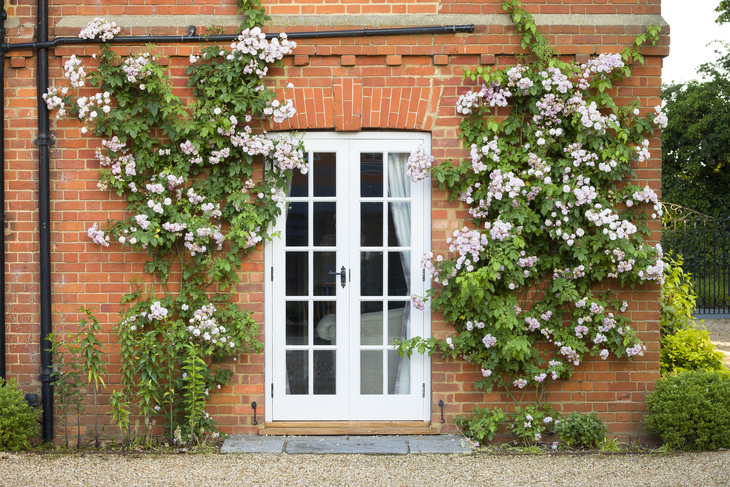
French doors are available in various styles, from classic grids to contemporary full-glass designs. Consider how the doors will enhance your home's architectural style and interior design. For a timeless appearance, select divided lite styles featuring several glass panels. Hardware finishes like brass, matte black, or brushed nickel contribute to unifying the overall appearance.
How do you choose the right French doors for your space?
1. Determine the function of your French door
The initial step is to determine the purpose for which you need your French doors. Usually, the French door serves as an access point to a patio or garden.
Exterior French doors must prioritize durability, energy conservation, and security. Understanding the primary function will influence your selections for material, glass type, and hardware.
French doors can serve as striking focal points, but they also need sufficient space for their swinging action. For compact areas, think about sliding patio doors. In spacious rooms, full-sized double doors that open outward can create a dramatic effect. Precise measurements of door frames and surrounding walls are crucial to guarantee the doors fit well without hindering furniture or pathways. That's why involving professionals is highly recommended.
2. Choose the appropriate material
Your French door's material affects both its aesthetic and its functionality, and its upkeep requirements.
Highly recommended French door materials are:
- Steel. A robust option for outside doors, steel offers outstanding safety and insulation. It functions effectively for contemporary houses as well as classic ones.
- Fiberglass. Long-lasting and energy-saving, fiberglass doors replicate the appearance of wood while requiring less maintenance. They are durable against decay, corrosion, and temperature variations.
3. Concentrate on glass choices
Because French doors are primarily composed of glass, the choice you make is important for both usability and appearance.
- Transparent glass enhances natural light and sight, perfect for linking indoor and outdoor spaces.
- Frosted or textured glass allows light to filter through while ensuring privacy, making it ideal for interior French doors.
- Energy-efficient glass, double or triple-pane featuring Low-E coatings, minimizes heat loss and UV damage, making it an excellent option for exterior doors.
If safety is an issue, think about tempered or laminated glass, as it is more durable and secure.
4. Emphasize safety and energy efficiency
Exterior French doors need to feature robust locking systems, sturdy frames, and high-quality seals to avoid drafts. Multi-point locks offer enhanced security compared to single-point alternatives, while weatherstripping aids in preserving energy efficiency.
5. Consider aesthetic and completion
French doors are available in numerous styles to enhance various architectural designs. Classic designs typically incorporate numerous small glass sections separated by grids, whereas contemporary styles might utilize larger, seamless panes for a streamlined appearance. You can personalize finishes to complement your interior or exterior design. Common colors consist of black for a striking, modern look, white for a timeless vibe, or natural wood finishes for coziness. Hardware like handles and hinges contributes to the overall design, select from polished brass, matte black, or brushed nickel based on your taste and overall style.
6. Importance of accurate measurements
Precise measurements made by door professionals of door frames and surrounding walls are necessary to guarantee that the doors fit well without hindering furniture or pathways.
7. Budget and long-term lasting
Ultimately, take your budget into account. Consider potential future savings in energy efficiency, upkeep, and longevity when evaluating your choices of steel and fiberglass French doors from Vinyl Light Windows and Doors.
What tools and materials are needed to install French doors?
French doors can significantly change a room, introducing sophistication, natural illumination, and a smooth flow between areas. Whether you’re swapping out an old set of doors or creating a new opening, adequate preparation with the appropriate tools and materials is crucial. Without their involvement, the project may turn out to be more complex than required.
Here is a detailed overview of what tools and materials door installers use to guarantee a seamless installation, along with a professional experience as a must:
- Measuring tape. Precision is crucial when fitting French doors. A measuring tape allows installers to verify the dimensions of the rough opening and door frame.
- Level. It ensures that the doors are plumb, level, and square. Even minor misalignment can lead to the doors sticking or failing to close correctly.
- Pry bar. When taking out old doors or trim, a pry bar helps you dismantle them carefully without harming the adjacent walls.
- Hammer. A hammer serves to pull out nails, drive shims, or gently tap the frame into place. A rubber mallet is useful for fitting parts without harming the door material.
- Drill or screwdriver. A cordless drill equipped with screwdriver bits accelerates the task of fastening hinges, screws, and fittings. A manual screwdriver can still be useful for precise adjustments.
- Saw. One might need a circular saw or a reciprocating saw if one needs to widen the opening or cut framing components. A handsaw can assist with minor modifications as well.
- Utility knife. Crucial for slicing caulk, eliminating old sealant, or adjusting shims.
- Caulking gun. Applied weatherproof sealant around the frame's edges blocks drafts and moisture infiltration. Silicone or polyurethane caulk designed for outdoor use seals the edges of the frame to prevent moisture and air leaks. Transparent or paintable options are helpful based on the finishing needs.
- Shims. Although they are technically a material, they serve as a tool to guarantee the correct spacing and alignment of the door frame.
- Nail kit. Aids in countersinking finish nails when fastening trim for a refined appearance.
- Foam. Foam insulation made for windows and doors aids in filling the spaces between the frame and rough opening without distorting the jamb.
- Casing. Interior and exterior casing or molding is applied around the door to conceal openings and enhance the look. Exterior trim, commonly brickmold, additionally offers weather protection.
- Hardware provided by homeowner or got with a new door as a combo. Handles, knobs, or levers are essential, accompanied by a locking system for safety. Certain French door sets are pre-drilled for standard hardware, whereas others need drilling during setup.
Having the appropriate tools and materials facilitates a smoother installation of French doors, minimizing costly expenses and guaranteeing the doors operate effectively for many years ahead. By organizing all the materials beforehand, measuring precisely, ordering customized French doors, having tools and materials prepared, and ensuring caulk is at hand, installers produce a polished appearance that improves your home’s aesthetics, performance, durability, and energy efficiency.
How to install French doors: What is the step-by-step process?
French doors enhance your home with elegance, brightness, and a seamless connection between indoor and outdoor spaces. Replacing an old sliding door or creating a new entrance, installing French doors is a somewhat advanced task that necessitates a professional door replacement team, precise measurements, appropriate tools, and patience.
Here is a detailed guide to assist you with the procedure used by installers during exterior French doors installations:
1. Collecting door installation tools, materials and supplies
Gather all the required tools and materials before beginning. Having everything readily available promotes a more seamless workflow without disruptions.
2. Preparation of the door opening
Taking out the previous unit. Installers remove the trim using a pry bar, then unscrew the old frame, ensuring that nails, caulking, and debris are removed.
For a new setup, installers construct the opening to the precise dimensions indicated by the manufacturer. Making sure the rough opening is somewhat bigger than the door frame to provide room for shimming and modifications. Verifying the opening for level and plumb on every side, as is essential to avoid misalignment afterward.
3. Testing if the door fits
Before using adhesive or screws, installers place the French door unit into the rough opening to check the fit. Ensuring that the frame is positioned accurately and that the doors open without obstruction. If the frame looks uneven, identify where shims are required. This “trial run” assists in preventing errors during the final installation.
4. Flashing and sealant
Waterproofing is crucial for exterior French doors. Installing flashing tape on the sill and edges of the opening is needed to guard against moisture. Next, installers apply a line of exterior-grade caulk along the threshold where the door sill will sit. This forms a barrier that resists weather and stops water from entering.
5. Placing and fastening the frame
With assistance, installers gently raise the French door unit into the opening and place it onto the caulk bead. Positioning the frame at the center of the opening. Utilizing a level to verify alignment both vertically and horizontally. Placing shims at the hinge locations and along the top until the frame is level and squared. Temporarily fastening the frame using screws through the hinge jamb. Verifying alignment before securing completely.
6. Securing the frame completely
After the door is correctly aligned, installers insert screws through the jambs into the studs. Then they position screws at hinge points and along the strike edge for support. Then they continue to verify that the doors open and shut seamlessly while securing the frame. (But excessive tightening may distort the frame).
7. Setting up the hardware
The majority of French door kits come with handles, locks, and strike plates. Adhering to the producer’s guidelines to secure these. Installing the flush bolts, top and bottom, on the passive door to ensure it locks properly, then fixing the handle set and latch on the active door. Verifying the locking mechanism to confirm correct functionality prior to proceeding.
8. Sealing and insulating
Installers fill the spaces between the door frame and the rough opening, applying insulation. Low-expansion spray foam is effective, but it's needed to steer clear of overfilling, since extra foam may displace the frame. Then installers apply caulk around the outer edge of the frame to block drafts and moisture. Finishing trim is added from the interior.
What are common mistakes to avoid when installing French doors?
1. Failing with accurate measurements
A frequent and expensive mistake is not obtaining precise measurements. French doors require accurate measurements to guarantee they fit properly in the frame. A tiny mistake can result in gaps, misalignment, and drafts. Numerous homeowners measure just once or think that standard sizes will suit their opening. The proper method is to measure the height and width of the opening at various points, selecting the smallest measurement for a tight fit. Considering framing, shims, and possible adjustments is also crucial.
2. Neglecting the level
French doors need to be fitted in a completely square and level frame. An uneven frame can lead to doors closing improperly, resulting in sticking, misalignment, or gaps. This can additionally put stress on the hinges, causing early deterioration. A frequent error is neglecting to verify and adjust the opening before installation. Always employ a level and make adjustments with shims or framing corrections to confirm the opening is square before installing the doors.
3. Ignoring weatherproofing and insulation
Forgetting about weatherproofing is a significant error that may result in water leaks, cold drafts, and increased energy costs. Certain homeowners don't add flashing or sealant around the door frame, resulting in openings that let moisture enter. Moreover, inadequate insulation around the door may lead to considerable heat loss during winter or cooling loss in summer. Get premium weatherstripping, flashing tape, and caulk to guarantee a secure seal.
4. Inadequate handling of heavy doors
Incorrect handling during installation may harm the frame, the glass, or potentially lead to injury. Raising and positioning French doors typically requires two individuals, so having an additional pair of hands enhances both the safety and ease of the task.
5. Incorrectly aligned hinges with hardware
Improperly installing hinges or hardware can hinder the smooth operation of doors. Hinges that are not aligned properly can lead to one door drooping, resulting in irregular gaps or scraping on the floor. Always spend time to properly align hinges, check the doors' swing, and make sure the locking system functions correctly.
6. Disregarding clearance and swing space
French doors need plenty of space to open fully. Homeowners occasionally neglect to think about how the doors will function inside the space. If walls, furniture, or other barriers obstruct the swing path, the doors may not fully open or could be damaged. Before installation, envision the doors' motion and modify furniture positioning or the opening method if needed.
7. Ignoring security features
Although French doors are lovely, they can also serve as a weak entry point if security considerations are not taken during installation. Consistently enhance your hardware and think about adding extra security options to ensure your home's safety.
8. Hurrying the replacement procedure
Installing French doors demands careful attention and accuracy. A hurried task frequently results in errors such as misalignment, inadequate sealing, or equipment problems.
For professional advice, high-quality products, and reliable assistance, contact Vinyl Light to ensure your French door replacement will be completed correctly. With lifetime doors and labour warranty, our team guarantees a seamless experience from beginning to end.
We focus on doors and windows, so our team recognizes the accurate measurements, critical aspects, necessary precautions, swing position, and reliable installation. Our experienced installers operate with accuracy, guaranteeing a flawless fit that improves both aesthetics and practicality.
We provide numerous customizable choices, such as colors, finishes, and hardware, ensuring your new doors fit your space flawlessly. All our steel and fiberglass doors are engineered for strength, safety, and energy efficiency, providing you with reassurance for many years ahead.
How do you adjust French doors for a perfect fit?
Misalignment may lead French doors to drafts, challenges with latching, or openings that undermine both safety and energy efficiency.
Fortunately, many of these problems can be fixed with some thoughtful adjustments, such as:
Step 1
With a level verify that the doors are vertically positioned and properly aligned within the frame. Identifying the precise problem allows you to prevent unwarranted modifications.
Step 2
Examine the hinges, as they are the primary cause of misalignment in French doors. As time passes, screws may become loose or the door could droop because of its weight.
Secure the screws with a screwdriver and inspect all the screws on the hinges. Even a single loose screw can make a door lean. If screws can no longer grip securely, substitute them with longer ones that extend to the wall stud.
Modify the hinge location. Certain contemporary hinges include integrated adjustment screws that enable you to shift the door vertically or horizontally. For aged hinges, you might have to slightly loosen the screws and manually adjust the hinge before tightening again.
If the door droops at the latch side, make minor adjustments by turning the top hinge inwards or the bottom hinge outwards to reposition it.
Step 3
Modify the latch and strike plate. If the doors don’t latch correctly, the strike plate might be out of alignment.
Adjust and reangle the strike plate slightly so the latch aligns properly. When the gap is narrow, a metal file can be used to widen the strike plate opening. In difficult situations, you might have to adjust the whole plate up or down and fill the old screw holes.
Step 4
Sealing to improve energy efficiency. Even after alignment, small openings can allow drafts to enter. For an ideal fit, apply or change the weatherstripping around the frame. Weatherstrips of the compression type are effective for French doors. Verify the threshold, as the bottom sweep should lightly touch the threshold without pulling. Modify the sweep or threshold height if needed. Seal outside openings between the frame and wall to stop air or water from leaking.
Step 5
Consistent upkeep or maintenance. After making adjustments, maintaining French doors in optimal condition guarantees they remain well-aligned. Annually apply silicone spray or graphite to lubricate hinges and locks. Examine weatherstripping each season and replace it if it is compressed or damaged. Regularly tighten screws and fittings to avoid sagging.
Step 6
Align the two door sections. French doors ought to align properly in the middle without any overlap or significant space. Apply weatherstripping to seal tiny openings that persist after making adjustments. If the doors are a bit warped, adjusting the hinges by tightening or loosening them can usually fix the alignment.
Step 7
Adjusting the threshold and sweep. The threshold and door sweep are essential for preventing drafts and moisture. If the doors are tight at the top but wobbly at the bottom, the threshold might require some adjustment. Numerous contemporary thresholds feature adjustable screws; twisting these alters the height of the seal. Replace your worn-out sweep to enhance the seal.
How can you ensure French doors are properly insulated and sealed?
French doors are made of two doors that come together in the center, featuring several glass panes, which can occasionally create issues with insulation and air sealing. Without proper maintenance, French doors can lead to drafts, moisture penetration, and energy reduction, raising heating and cooling expenses.
Homeowners can follow suggestions to keep these French doors insulated and sealed properly:
a) Inspect and change weatherstripping
Weatherstripping is essential for preventing outside air from entering your home. With time, the strips on the top, sides, and connecting edges of French doors may deteriorate, become cracked, or lose their flexibility. Move your hand across the borders of the doors to detect any drafts. Search for noticeable openings or light passing through.
Select top-notch, long-lasting weatherstripping materials like foam, rubber, or silicone, based on the door frame and style. Make sure it’s trimmed to the appropriate size and securely fixed for a tight fit.
b) Door sweeps upgrade
The base of French doors often serves as a weak spot for drafts. A door sweep, which is typically a rubber or brush strip fixed to the lower edge, assists in closing the space between the doors and the ground.
Adjustable sweeps are perfect for irregular floors, providing a snug seal while ensuring doors open and close easily. If you currently have sweeps but notice light or airflow underneath, it’s time to replace them. To enhance insulation, consider adding threshold seals that elevate to align with the sweep when the doors shut.
c) Fill cracks with caulk
French doors have trim that may become loose or crack over time, creating small openings where air and moisture can enter. Apply new caulk around the outside frame where the trim intersects with siding or brick. Utilize a paintable, weatherproof caulk for longevity and a tidy appearance. Inspect the interior edges as well. If you notice cracks or gaps, reapply caulk in those spots. A tip: steer clear of excessive caulking. Spread a uniform layer and remove any surplus using a wet finger.
d) Change the glass for insulation
French doors are two large glass panels, and the glass type significantly influences energy efficiency. Double or triple glazing greatly diminishes heat transfer in comparison to single-pane glass. Low-emissivity coatings aid in reflecting heat during summer and retaining warmth in winter, reducing energy costs.
e) Window films
When glass replacement isn't feasible, insulating with films offers a cost-effective solution for enhancing thermal protection and minimizing UV exposure.
f) Guarantee correct door alignment
Even the finest insulation materials will fail to perform properly if the doors are not aligned. Improperly installed doors can lead to uneven gaps, preventing weatherstripping or sweeps from working effectively. Secure or realign hinges to ensure the doors are balanced. Utilize shims if required. Inspect the seal by shutting both doors and ensuring they align evenly in the middle with no spaces. If one side curves outward, the locking mechanism will not secure correctly. In cases of significant alignment problems, a door professional might have to realign or trim the doors.
g) Locks and security devices
The locking system also influences how securely French doors close. A multipoint locking mechanism, which fastens the door at multiple locations on the frame, offers a tighter and more uniform seal than an individual deadbolt or latch. It provides improved security, diminished drafts, and more effective pressure distribution along the door edges.
Regularly lubricate locks and hinges to guarantee smooth function and a reliable seal.
h) Order a door with integrated miniblinds, use thermal drapes or shades
For added insulation, particularly in cooler areas, put up heavy curtains or insulated shades over French doors. Although not a long-term solution, they aid in preserving warmth on winter nights and preventing too much solar heat in summer.
French doors with miniblinds from Vinyl Light are the best privacy and insulation solution.
What are the key differences when installing French doors vs standard doors?
1. Based on aesthetic and design
The installation process is also influenced by the visual and functional results.
- French doors are selected mainly for their visual attractiveness and capacity to introduce natural light. This, however, necessitates taking additional precautions to guarantee the glass is safely managed during installation. Their graceful look requires meticulous craftsmanship so that the doors improve the room’s design instead of diminishing it.
- Standard doors. Although less complex in design, standard doors offer greater versatility and can be installed with less precision than that required for French doors. They stay operational and safe with minimal effort during setup.
2. Based on the time needed to install a door
- French doors. Installing French doors typically requires more time and usually needs professional skills. Due to their dimensions, heaviness, and requirement for exact alignment, fitting French doors demands more work. Typically, it takes two individuals to raise and place the doors, and the task may take several hours or even an entire day if structural modifications are needed.
- Standard doors. Regular doors are typically set up in only a few hours, particularly when they are pre-hung models. Typically, just one installer can manage the process with relative ease.
3. Based on structure
A key difference is found in the level of structural support needed.
- French doors are generally wider since they are made up of two hinged panels that open from the middle. This frequently involves enlarging the current doorway or establishing a new entrance that can fit their dimensions. In numerous situations, structural framing needs reinforcement with extra headers or support beams to accommodate the added weight and width. This becomes particularly crucial when the doors are placed on an external wall since the home's supporting framework is impacted.
- Standard doors, as a single-panel door, need a considerably smaller opening and usually do not require significant structural changes. The setup is simpler, particularly when swapping out an existing door of comparable dimensions. Standard doors are frequently simpler to install into current opening without significant remodelling.
4. Based on alignment difficulty
Ensuring the doors align correctly is another important distinction.
- French doors are made up of two panels that need to align exactly in the center, ensuring correct positioning is more challenging. Both doors must be level, square, and properly aligned with one another to ensure they close securely without any gaps. Incorrect installation may result in drafts, security concerns, and challenges in operating the doors. Installing weatherstripping demands accuracy as well.
- Standard doors, as single-panel doors, only have to fit correctly in their frames, which simplifies the process. Modifications often include confirming that the hinges are aligned correctly and the latch is positioned with the strike plate. The margin for mistake is narrower and significantly simpler to adjust than with French doors.
5. Based on sealing and insulation
Energy efficiency is vital in door installation, with French doors showing considerable variation.
- French doors. Due to their larger openings and central seam, French doors offer increased chances for air leakage. Effective sealing involves additional measures, including installing weatherstripping on both panels, caulking the edges, and confirming the threshold is secure. Numerous homeowners choose double- or triple-pane glass French doors for better insulation, yet the installation needs to be exact to avoid drafts.
- Standard doors. A single door has fewer areas where air can leak, which simplifies insulation. Weatherstripping is typically installed solely around the frame and the threshold. This inherently makes them more efficient and simpler to seal correctly during installation.
6. Based on security and hardware
The installation of hardware differs between French doors and standard doors.
- French doors. Due to having two panels, French doors typically need extra hardware for added security. One door is usually stationary with flush bolts at the top and bottom, while the operational door is equipped with a handle, lockset, and occasionally a multipoint locking mechanism. Make sure that all locks function seamlessly and don’t introduce additional complexity to the installation process.
- Standard doors. Standard doors require only one lockset and handle with a single panel. Security hardware is more straightforward, and its installation requires fewer steps.
H2: How much does it cost to install French doors?
Whether accessing a patio, garden, or balcony, French doors provide a lovely combination of elegance and functionality. Nonetheless, before investing in them, it’s crucial to comprehend the possible expenses associated with them. The cost of installing French doors can differ significantly based on various factors, such as material, dimensions, design, labor, and extra features.
Let's have a closer look:
- Typical cost range.
- Homeowners typically anticipate costs ranging from $3,000 to $5,000 for the installation of French doors, covering both materials and labor.
- Standard options may begin at approximately $3,000, whereas high-end custom setups can exceed $5,000.
If to split the costs, we can see the following:
- Actual door material cost: $2,200 to over $4,000
- Installation cost: $800 to $1,500
- Extra expenses, screen, handles, glass enhancements, color: $200 to over $1,000.
- Door material.
- Steel is durable, contemporary, and reliable, typically priced at $2,200 - $4,000
- Fiberglass is sturdy, energy-saving, and moderately priced at $5,000 - $7,000.
- Choices for glass.
The type of glass selected will impact the price as well.
- Clear glass is less expensive.
- Triple-glazed door glass inserts enhance insulation while increasing expenses by $400 - $800.
- Decorative or frosted glass provides privacy and aesthetic appeal, with additional costs ranging from $500 to over $1,000.
- Dimensions and personalization.
Regular French doors are generally measured 60 to 72 inches in width and stand 80 inches in height.
Custom dimensions, curved tops, shapes or distinctive panel patterns raise both material and workforce expenses.
- Labor and replacement extras.
Labor expenses are determined by whether the opening is already established or needs alteration.
- Existing doors replacement: $800 - $1,000 for labour costs.
- Making a wall cut: $1500 - $3000+.
- Extra framing or structural support may increase costs by $500–$2,000.
- Hardware.
Handles, locks, and hinges can be basic and budget-friendly or elaborate and luxurious. Anticipate $200 - $500 or more for additional hardware.
Security enhancements, like multi-point locking mechanisms, contribute to the overall cost.
French doors may appear to be a simple DIY task, but they demand expert skills. Reaching out to door professionals such as Vinyl Light is crucial.
Our team guarantees that your exterior French doors are installed properly from the start. Our specialists manage everything from accurate measurements to sturdy framing and waterproof sealing, ensuring both practicality and visual attractiveness. Our doors are produced in Ontario and offer the best customization features. Keep in mind that the Vinyl Light installers provide hardware installation at no extra cost!
We supply and install steel and fiberglass doors with all the configurations possible. We grant access to top-notch materials and offer a guarantee on our craftsmanship, ensuring you feel secure that your investment is safeguarded. Rather than enduring weekends with unclear guidelines and possible mistakes, allow us to manage the procedure effectively and securely. Through our expert installation, you can appreciate the elegance, strength, and safety of your French doors without any of the hassle.
Contact us with a phone call, email or by sending an online request, and we will get back to you right away with our best assistance.
How long does it take to install French doors for most homeowners?
For the majority of homeowners, installing French doors requires approximately 4 - 6 hours when completed by a professional crew. Nonetheless, if alterations to the structure are needed, such as widening an opening, redoing walls, or incorporating sidelights and transoms, the task could take one to two complete days.
Employing experts not only shortens the installation duration but also guarantees that the task is completed accurately on the first attempt. Incorrect installation can result in drafts, leaks, or doors that are misaligned and do not close correctly. A skilled team possesses the resources and knowledge to address unforeseen problems swiftly, reducing delays and avoiding expensive errors.
Here’s a typical outline of how the timeline of French door installation usually unfolds:
- Preparation and old door removal. When replacing old doors, contractors will start by carefully taking them out. This involves removing the trim, frame, and threshold, and making ready the opening for the new French doors. The time to remove old doors can vary based on their age and condition. The process can be prolonged if issues such as rotting wood or poor framing show up.
- Framing and modifications. If the new French doors match the dimensions of the old doors, few modifications are necessary. Nonetheless, when you are cutting into a wall or enlarging the opening, framing and support tasks can increase the job duration by several hours. Supporting the walls might need additional fortification, potentially lengthening the timeline considerably.
- Installation of a door. When the opening is prepared, the new French doors are installed, aligned, and fastened securely. Expert installers make certain the doors are levelled and squared, which is essential for seamless functionality and adequate sealing.
- Sealant and insulation. Weatherproofing is a crucial process. Installers place insulation around the structure and sealant to block drafts, water infiltration, and energy waste. Adequate insulation also prolongs the lifespan of the doors.
- Final adjustments. Ultimately, trim and casing are fitted, hardware is secured, and the doors are checked for correct functionality. This phase guarantees both practicality and an elegant, appealing look.
French doors are a highly desired home enhancement, providing elegance, natural illumination, and seamless entry between indoor and outdoor areas. When incorporating them into a living room or dining room, many homeowners ask:
What is the actual installation duration? Although each project is distinct, comprehending the usual timeline and the factors that affect it can aid in more effective planning.
Vinyl Light is the right place to address if you need a new French door, which is durable, energy efficient and is packed with lots of customization options. Our installation crew will seamlessly replace your old door within just one day. Sometimes, we need just 3 to 4 hours to complete the job in case there are no extras involved, such as wall modification or enlargement. Give us a call, send an email or complete the online request form, and one of our technicians will reach you the same day to set up a free in-home or online estimate.
What maintenance is required after installing French doors?
a) Regular door cleaning is highly recommended
One of the easiest yet most essential tasks is maintaining the cleanliness of your French doors. Dust, grime, and residue can build up on the glass and frames, reducing their appeal and possibly leading to deterioration over time.
Regularly clean the panes with a microfiber cloth and a non-abrasive glass cleaner. Stay away from strong chemicals that could harm coatings, particularly if your doors feature energy-efficient glass.
Based on the material, utilize gentle soap and water for vinyl or fiberglass, while using specific cleaners for wood or aluminum.
Avoid soaking wooden casing or frames with water, since this may cause swelling or decay. Remove dirt by sweeping door sills. Accumulated debris can disrupt smooth functioning and lead to scrapes.
b) Maintenance of seals and weatherstripping
A key advantage of French doors is the natural light and airflow they offer. Nonetheless, this also renders them a possible vulnerability to air leaks if seals are not properly preserved.
Examine weatherstripping by looking for fissures, openings, or damage in the weatherstripping at the borders. Swiftly replace any damaged areas to preserve insulation and reduce energy costs.
An improperly aligned door can disrupt the seal between the frame and the door. If you feel drafts, the door might require adjustment to achieve a tight fit.
c) Hardware check-ups
The locks, hinges, and handles on French doors experience daily usage. Lacking consistent maintenance, they may become loose, corroded, or out of alignment. Every few months, use a silicone spray or a few drops of lightweight machine oil on hinges, locks, and sliding tracks. Steer clear of products made from petroleum, as they can draw in dust.
Regularly inspect the screws on handles and hinges. Secure any of them that have become loose to maintain stability.
Routinely assess your locking system to ensure it operates seamlessly. Misaligned locks can weaken security and reduce energy efficiency.
d) Glass and grille upkeep
Numerous French doors have several panels or ornamental grilles. These enhance charm but also need a little extra attention.
If your French doors feature grilles situated between the glass layers, they require no maintenance. For exterior-positioned grilles, clean meticulously along the edges to avoid the accumulation of dust and dirt. If they are detachable, remove them for more thorough cleaning from time to time.
The presence of condensation between the panes may suggest a broken seal in double- or triple-pane glass. This might necessitate expert replacing.
e) Inspect for structural problems
As time passes, older French doors might adjust slightly because of house settling or seasonal temperature fluctuations.
Should doors stick, drag, or close unevenly, the hinges might require adjustment. This aids in avoiding lasting frame damage.
Ensure the threshold is not worn, broken, or detaching from the frame.
f) Seasonal upkeep
Varied weather conditions present distinct challenges for older French doors.
In winter, inspect for drafts and enhance insulation around the frame. Promptly remove any accumulation of snow or ice to avoid moisture damage.
Spring and fall are perfect seasons for a comprehensive inspection and cleaning, readying the doors for severe temperatures.
Where can you find expert help or tutorials for installing French doors?
1. Windows and doors companies
A highly trustworthy source of expert assistance is the companies that specialize in door and window installation. These professionals possess practical experience with various kinds of French doors and entry doors.
By reaching out to a professional, you gain access to the following services:
- Measurements taken on the spot to guarantee an ideal fit.
- Advice on door designs and materials that complement your home's architectural style.
- Professional installation that ensures seamless functionality and adequate sealing.
- Guarantees for both the item and workmanship, providing an assurance.
If you're uncertain about managing the installation alone, seeking a professional like Vinyl Light Windows and Doors guarantees that the work is completed correctly on the first attempt.
2. Major home improvement stores
Frequently offering installation guides and services. Their sites often include step-by-step tutorials, videos, and downloadable guides.
Certain stores offer in-person workshops or online classes that guide you through the fundamentals of installing doors. This makes them an easy choice for both education.
3. YouTube instructional videos
YouTube ranks among the most favoured platforms for DIY fans. Numerous excellent videos provide detailed guidance on installing doors.
The benefit of YouTube is that you can visually observe the installation process, making it simpler to grasp than reading instructions. You may evaluate various techniques, observe how experts manage typical errors, and stop or go back as necessary.
Nonetheless, selecting tutorials from trusted sources is crucial. Seek out experienced DIY specialists or home improvement professionals who have positive feedback.
4. Blogs on DIY projects
Some websites frequently offer comprehensive articles and guides on how to install French doors.
Such resources generally consist of:
- Lists of tools and materials.
- Instructions in sequential order accompanied by images.
- Advice for steering clear of frequent errors.
DIY enthusiasts' blogs can be useful, as they frequently offer personal stories, insights gained, and inventive answers to typical installation issues.
5. Discussion web platforms and forum groups
For those who enjoy interactive learning, online platforms like Reddit and others, serve as great venues to pose inquiries. There, you can seek guidance from homeowners who have undertaken comparable projects; request clarification from experts on challenging steps; and post images of your project for tailored feedback.
Forums provide the benefit of resolving issues instantly and leveraging shared expertise.
6. Educational books or ebooks
For homeowners who appreciate in-depth written instructions, numerous books and ebooks exist on door installation and home enhancement.
Books can serve as a useful resource to have readily available during the project, particularly if you like a structured, step-by-step approach without interruptions.
The ideal resource relies on your expertise, financial constraints, and ease with do-it-yourself tasks. When precision and long-term results are your main concerns, employing a professional is usually the optimal choice.
Contact Vinyl Light Windows and doors, and visit our helpful website for assistance in understanding French doors, their configuration options, customization options, hardware selection, how the installation process works and more. We provide free estimates and a lifetime warranty on windows and 10 years doors we supply and install.
What do professionals recommend for a long-lasting French door installation?
Keeping French doors beautiful and functional for years involves more than selecting an appealing design; it also relies on expert installation methods and wise material selections.
Here are the primary suggestions that door specialists highlight for attaining a long-lasting French door installation.
- Select good quality materials.
The material is crucial for a durable French door installation.
- Steel - durable, provides security and supports energy efficiency.
- Fiberglass - extremely resilient against bending, breaking, and decaying. It imitates the appearance of wood yet needs little upkeep.
A professional door technician will assist you in balancing appearance, cost, and durability when choosing your door material.
- Look for adequate insulation and energy efficiency.
Experts emphasize that energy efficiency is essential for durable installations, particularly in regions with severe winters or scorching summers.
Suggestions consist of: insulated frames, premium weatherstripping that stops air leaks, water intrusion, and foam insulation.
Lacking these measures above, you might encounter drafts, condensation, or harm resulting from moisture penetration.
- High-quality glass selection.
The quality of glass, being a key characteristic of French doors, directly affects their durability and performance:
- Double or triple glazing enhances energy efficiency and reduces condensation.
- Low-E coatings reflect heat in the summer, and keep heat in the winter.
- Tempered or laminated glass enhances safety and durability, minimizing the likelihood of breakage.
A door featuring high-quality glass will not only endure for a longer period but will also lower energy costs and improve comfort.
- Employ door experts to install a new French door.
While DIY installation might seem appealing, a skilled installer understands the intricate aspects that guarantee a lifespan of many years. Even the priciest French doors will not function properly if installed incorrectly. Experts emphasize the significance of correct alignment and sealing to avoid problems like drafts, leaks, or early deterioration.
Professionally levelled framing guarantees proper function without drooping or binding. Weatherproof sealing employs flashing tape, caulk, and waterproof membranes surrounding the frame to prevent moisture intrusion.
Proper hardware positioning avoids strain on hinges and maintains uniform alignment.
- Routine maintenance scheduling.
A perfect installation still needs attention to stay in optimal shape.
Experts usually advise: oiling hinges and locks, ensuring the components function seamlessly; checking seals every year; changing damaged weatherstripping or broken caulking to prevent leaks; washing glass and frames to stop accumulation of grime or harmful substances.
Proactive maintenance guarantees your French door endures longer while preserving its charm and effectiveness.
To ensure your French doors exude elegance, security, and energy efficiency for decades, seeking professional expertise and skilled craftsmanship from Vinyl Light Windows and Doors is the most dependable option instead of trying to solve this on your own by DIY. With proper planning and attention, our team will help you choose the ideal French door design options specifically fitting your home. Our steel and fiberglass French doors are a great investment, adding significantly to your home's value, enhancing its beauty.
Simply visit our webpage door section, explore our door catalogues and build the door of your dream right on our website, then reach out to us to get a free estimate and more helpful door tips.
What are the key takeaways for installing French doors in your home?
Before installing French doors, homeowners need to be aware of the key factors to guarantee that the project is not only successful but also long-lasting.
Here are the key takeaways to consider when planning and installing French doors in your residence:
1. Selecting the appropriate location for your door
The initial choice pertains to deciding the location for the French doors. Numerous homeowners use them as an access point to a patio, garden, balcony or terrace.
Functionality: consider the movement of home traffic. French doors ought to open into an area where they won't block furniture or cause crowding.
Position them in spaces where enhancing natural light is advantageous, like a patio, garden, or swimming pool.
2. Choosing the right door materials is important
French doors are available in different materials, each offering distinct advantages. Your selection ought to represent your home's style, weather conditions, and upkeep desires.
- Steel - durable and safe, are often used in classic French door styles.
- Fiberglass - long-lasting, energy-conserving, and weather-resistant, making it perfect for extreme environments.
3. Security
Although French doors are attractive, certain homeowners have concerns about their safety. Contemporary designs integrate cutting-edge elements to ensure safety:
- Multi-point locking systems, which provide enhanced security compared to traditional single-point locks.
- Tempered or laminated glass, which enhances protection against break-ins.
- Reinforced frames, which make the door durable and more resistant to break-ins.
- Expert installation, which guarantees an ideal fit, appropriate sealing, enduring strength, resulting in savings over time by preventing expensive repairs.
4. Insulation with energy efficiency
A key point to remember is to make sure your French doors are energy efficient. Big glass panels can occasionally cause drafts or heat loss, making it essential to choose the appropriate glass and installation method.
Double or triple glazing: enhances indoor comfort while reducing energy costs.
Low-E coatings: decrease UV harm and lessen heat absorption.
5. Options for customization or personalization
French doors can be customized to match your home's architectural design and individual preferences.
- Grille designs: ranging from classic divided to contemporary full-glass styles.
- Color options: standard white, black, or custom-painted surfaces to complement your residence. The colours may vary on both sides of the door's slabs.
- Hardware designs: handles, locks, and hinges offered in finishes such as brass, chrome, or bronze.
- Glass choices: clear, frosted, or ornamental glass for enhanced privacy and style.
- Glass with built-in miniblinds.
6. Maintenance and care
French doors need regular maintenance to remain functional and appealing.
- Regularly cleaned glass avoids the accumulation of dust and fingerprints for optimal brightness.
- Applying lubricant to hinges and locks guarantees seamless functioning and avoids deterioration.
- Inspecting seals and weatherstripping ensures energy efficiency.
7. Pricing and value
The cost of French doors depends on the materials used, size, the type of glass, and how complicated the installation is.
- Higher resale value - the properties featuring French doors typically attract buyers because of their attractiveness and utility.
- Energy efficiency features - French doors help to use less energy, and can assist in lowering heating and cooling expenses over time.
- Aesthetics - the aesthetic enhancement can change a space, introducing both sophistication and a feeling of spaciousness.
General conclusion
The key takeaways for installing French doors focus on wise choices regarding placement, materials, energy efficiency, and the method of installation. French doors serve as more than just an entrance - they act as a design feature that increases natural light, enhance the transition between interior and exterior areas, and boost your home's value. Investing in high-quality steel or fiberglass materials, an expert installation, and providing regular maintenance will guarantee that your French doors stay a classic and functional addition for years.